
e
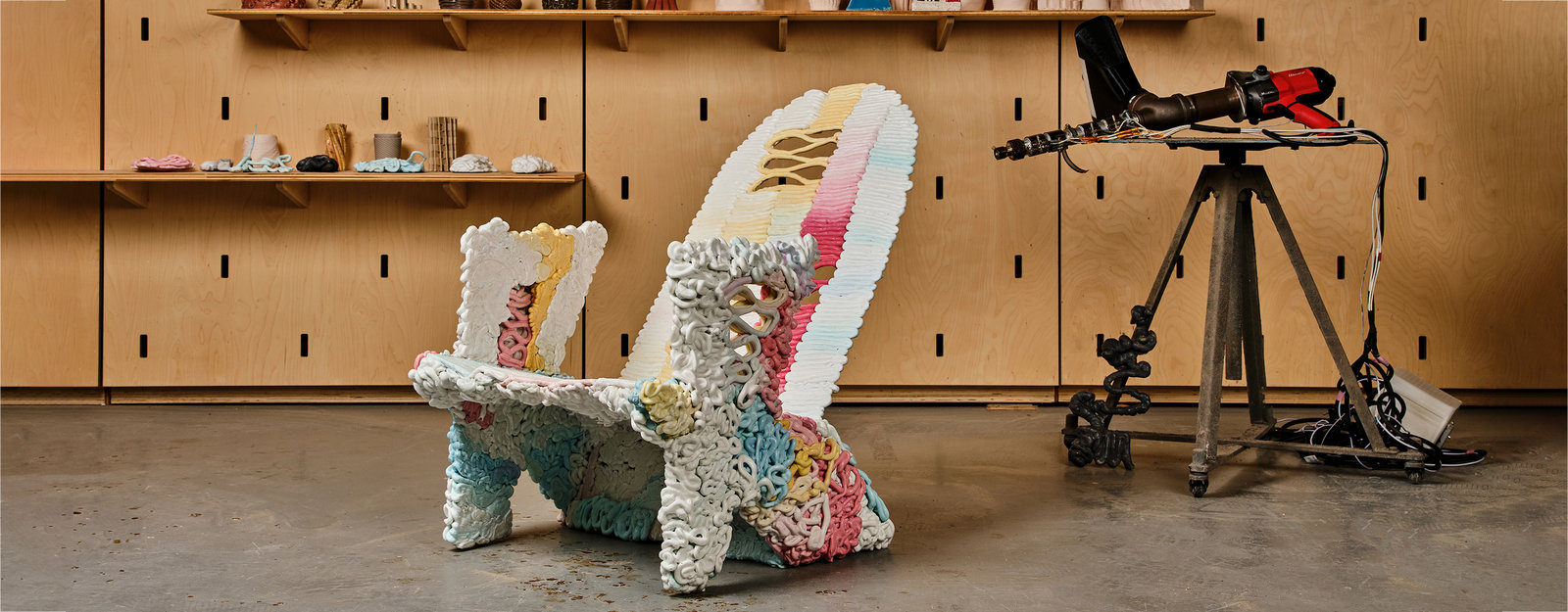
Plastic Reimagined: From Campus Waste to Civic Seating on View at Atlanta's Airport
What began as a site-activated installation during Goat Farm's SITE 2025 arts festival—first encountered by thousands over a single night—has evolved into a year-long public exhibition at Hartsfield–Jackson Atlanta International Airport. Plastic Reimagined transforms locally sourced plastic waste into full-scale seating prototypes, bridging design education, material research, and civic infrastructure at one of the world's busiest public sites.
Design Team
Curator & Instructor: Hyojin Kwon (Assistant Professor, Georgia Tech School of Architecture; Cofounder of Pre- & Post-, https://preandpost.net/)
Participants: Anuj Chhikara, Darby Fly, Sara Hill, Ash King, Brian Lachnicht, Nicholas Liubinskas, Kayla Rinoski, Tianxiang Sheng, Sarah Thrasher, Rachel Witherspoon, Taylor Jensen, Qin Wang, Kai Wang
Partners: Georgia Tech Office of Sustainability, Invention Studio, Materials Innovation and Learning Laboratory (MILL), The Hive, US Plastics Recovery
Support: Arts at Tech Catalyst Grant, Georgia Tech College of Design, School of Architecture
Photography: © Andrew Thomas Lee
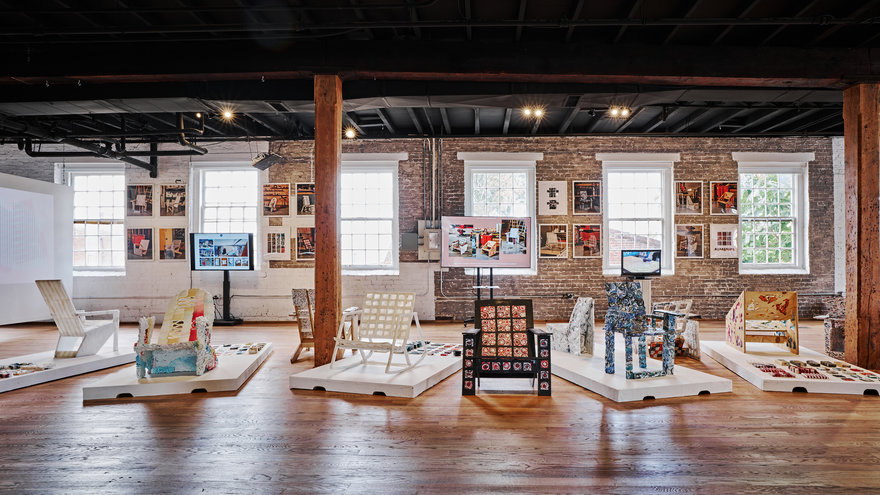 © Andrew Thomas Lee
Plastic Reimagined at SITE 2025, Goat Farm Arts Center, Atlanta.
© Andrew Thomas Lee
Plastic Reimagined at SITE 2025, Goat Farm Arts Center, Atlanta.
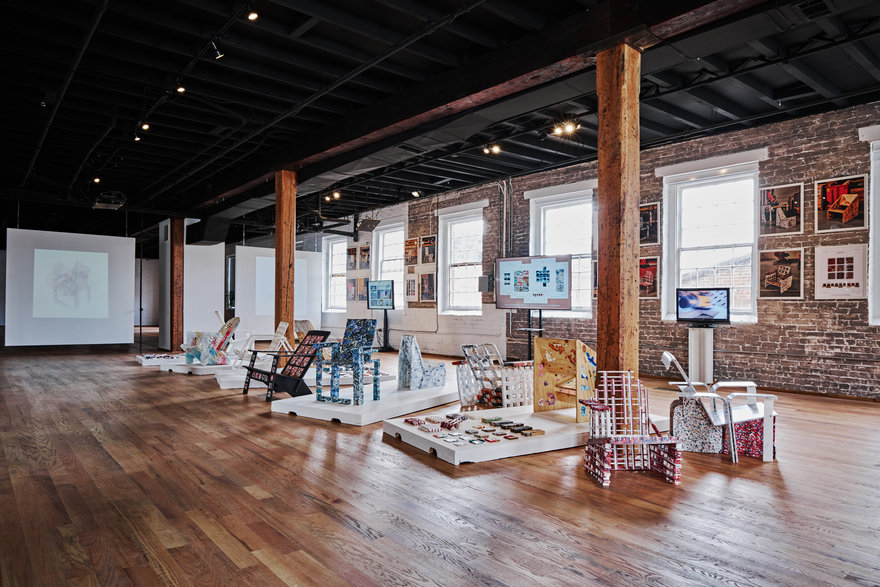 © Andrew Thomas Lee
Plastic Reimagined at SITE 2025, Goat Farm Arts Center, Atlanta.
© Andrew Thomas Lee
Plastic Reimagined at SITE 2025, Goat Farm Arts Center, Atlanta.
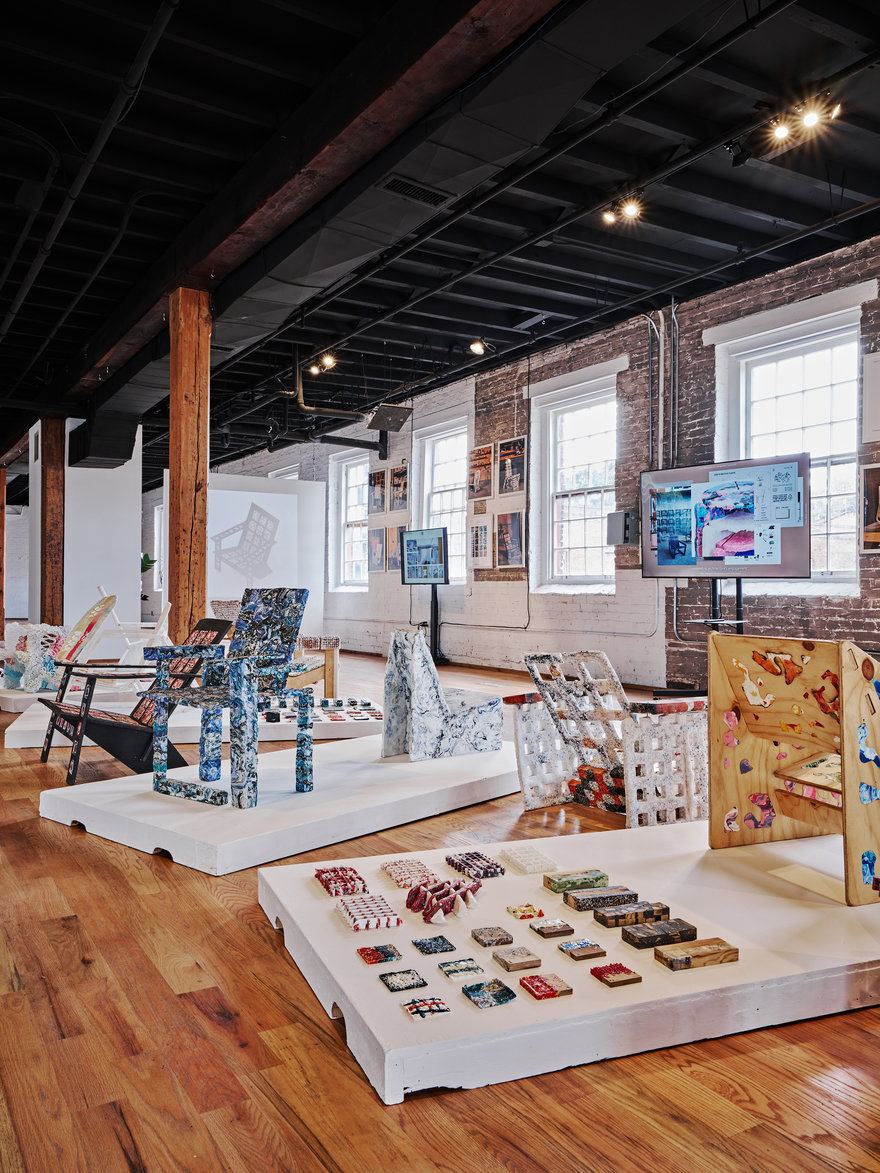 © Andrew Thomas Lee
Plastic Reimagined at SITE 2025, Goat Farm Arts Center, Atlanta.
© Andrew Thomas Lee
Plastic Reimagined at SITE 2025, Goat Farm Arts Center, Atlanta.
 © Andrew Thomas Lee
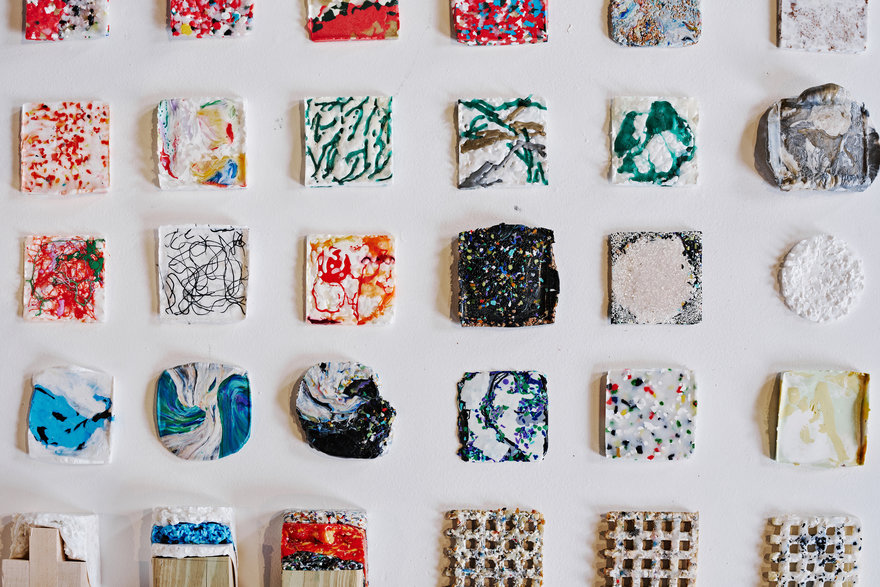
Discarded plastics are shredded, pressed, milled, or cast into form
© Andrew Thomas Lee
Discarded plastics are shredded, pressed, milled, or cast into form
 © Andrew Thomas Lee
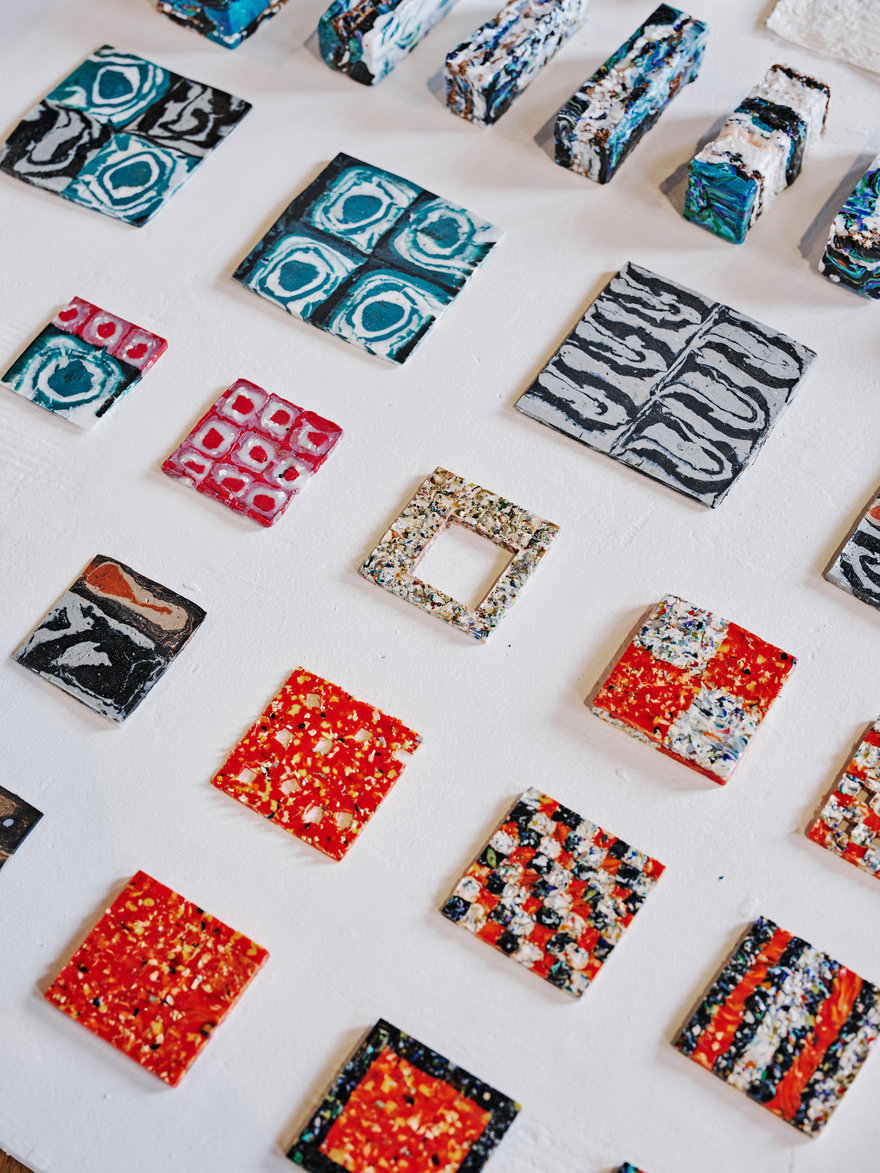
Discarded plastics are shredded, pressed, milled, or cast into form
© Andrew Thomas Lee
Discarded plastics are shredded, pressed, milled, or cast into form
 © Andrew Thomas Lee
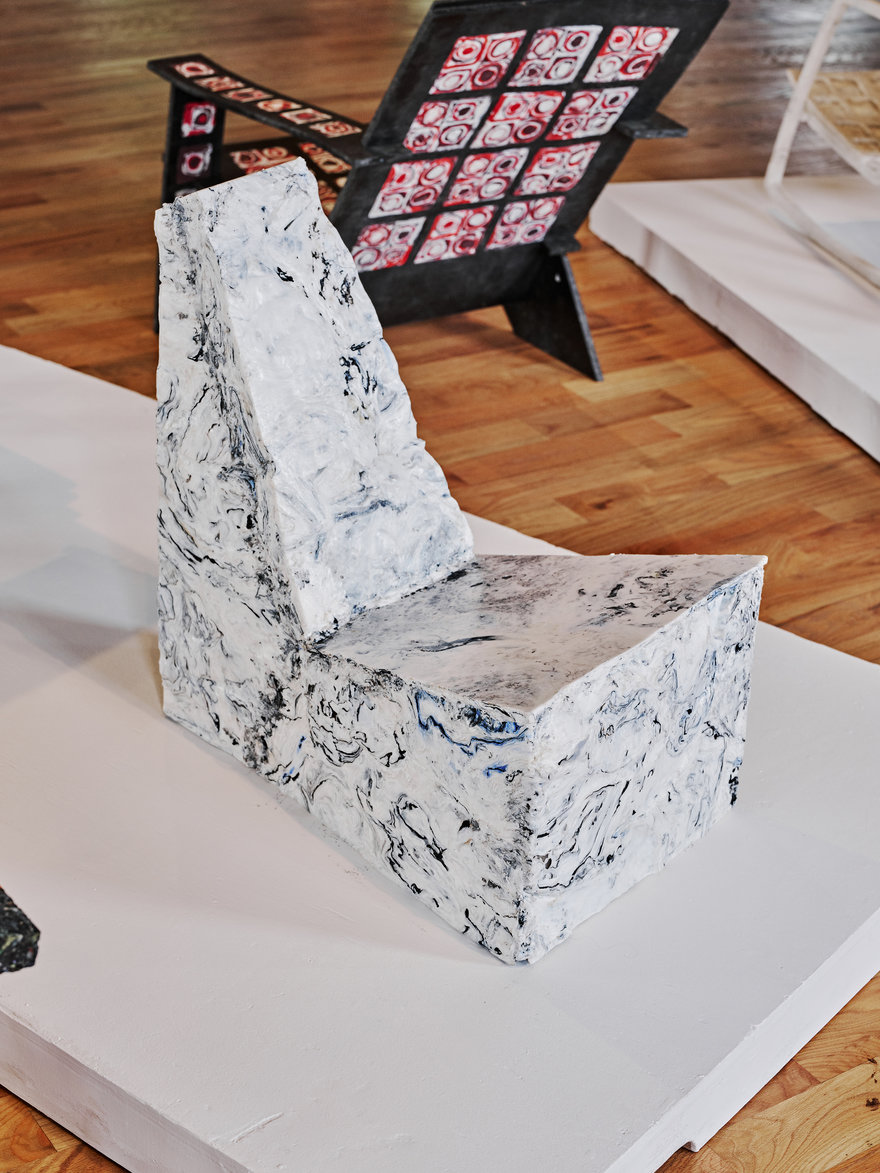
Plastic Rocks – marbled HDPE and PLA form a monolithic, stone-like chair that reinterprets the Adirondack as a chiseled block
© Andrew Thomas Lee
Plastic Rocks – marbled HDPE and PLA form a monolithic, stone-like chair that reinterprets the Adirondack as a chiseled block
 © Andrew Thomas Lee
Modu-Chair – Adirondack form built from PLA/HDPE cubic modules, echoing quilting patterns through stacked, interlocking blocks
© Andrew Thomas Lee
Modu-Chair – Adirondack form built from PLA/HDPE cubic modules, echoing quilting patterns through stacked, interlocking blocks
 © Andrew Thomas Lee
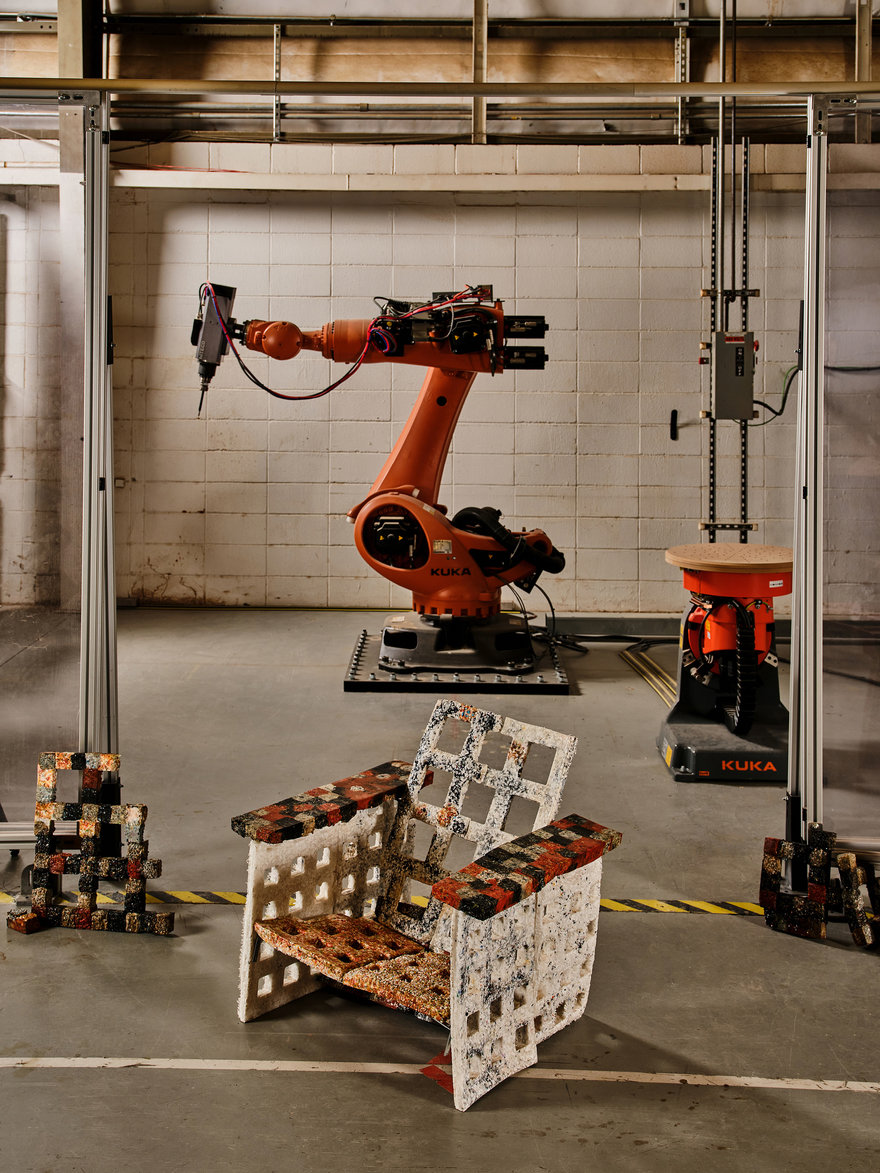
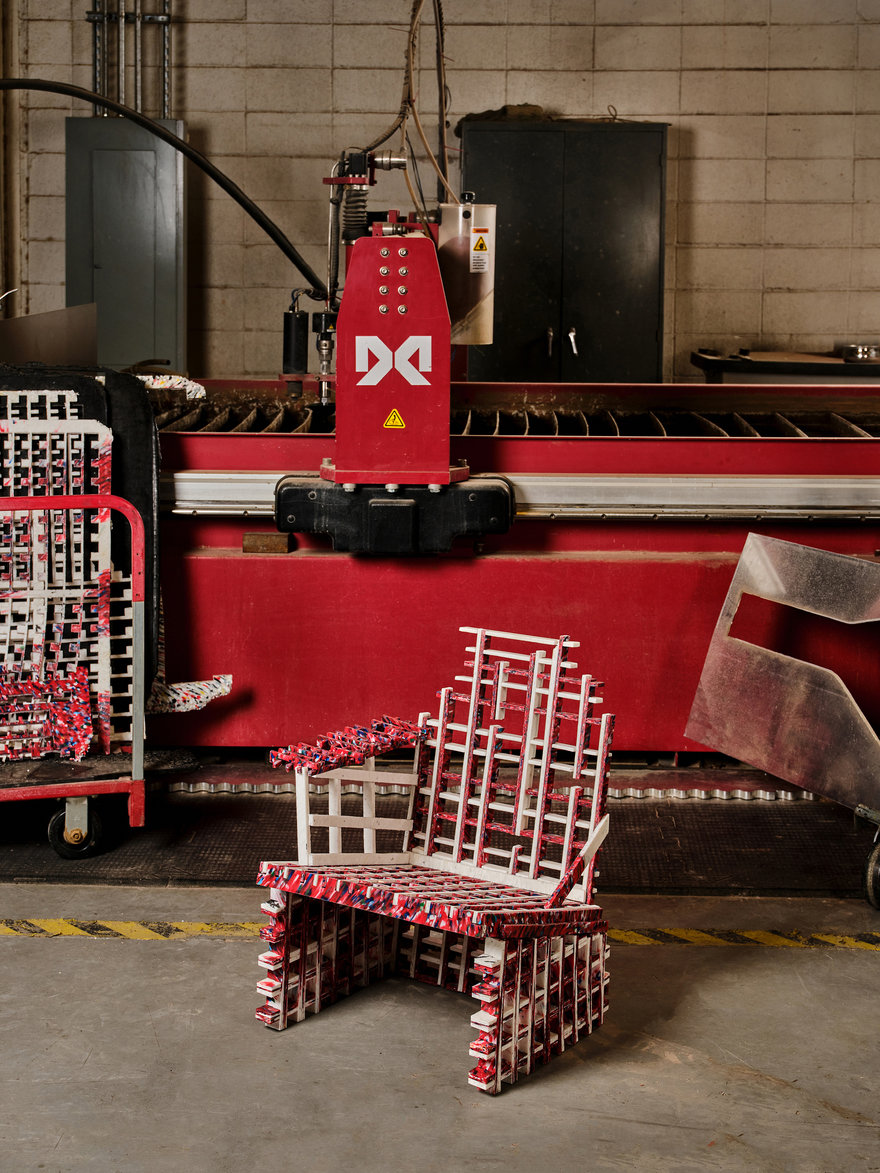
Framework – waterjet-cut lattice in recycled HDPE, translating Adirondack solidity into a modular, transparent structure
© Andrew Thomas Lee
Framework – waterjet-cut lattice in recycled HDPE, translating Adirondack solidity into a modular, transparent structure
 © Andrew Thomas Lee
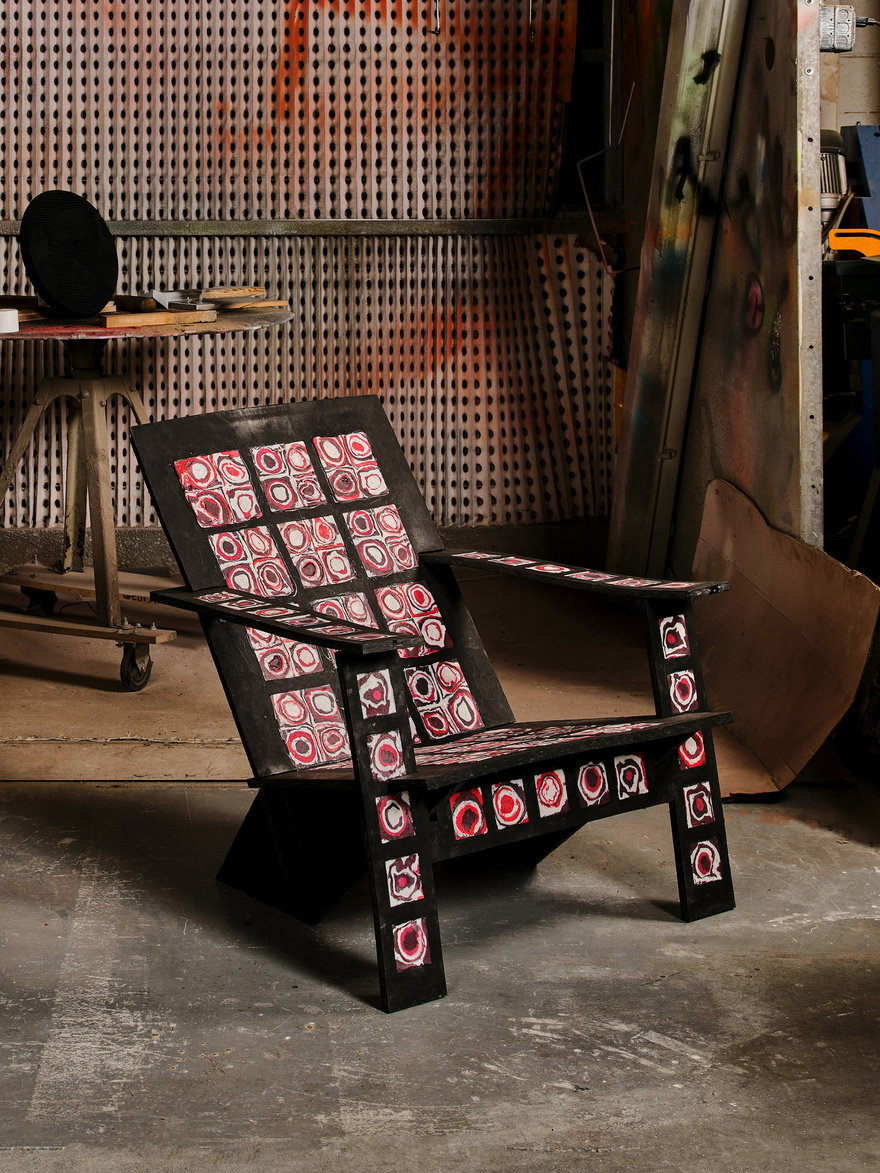
Plastic Lamina – tiled HDPE panels combining precision-machined frames with hand-rolled, patterned inserts
© Andrew Thomas Lee
Plastic Lamina – tiled HDPE panels combining precision-machined frames with hand-rolled, patterned inserts
 © Andrew Thomas Lee
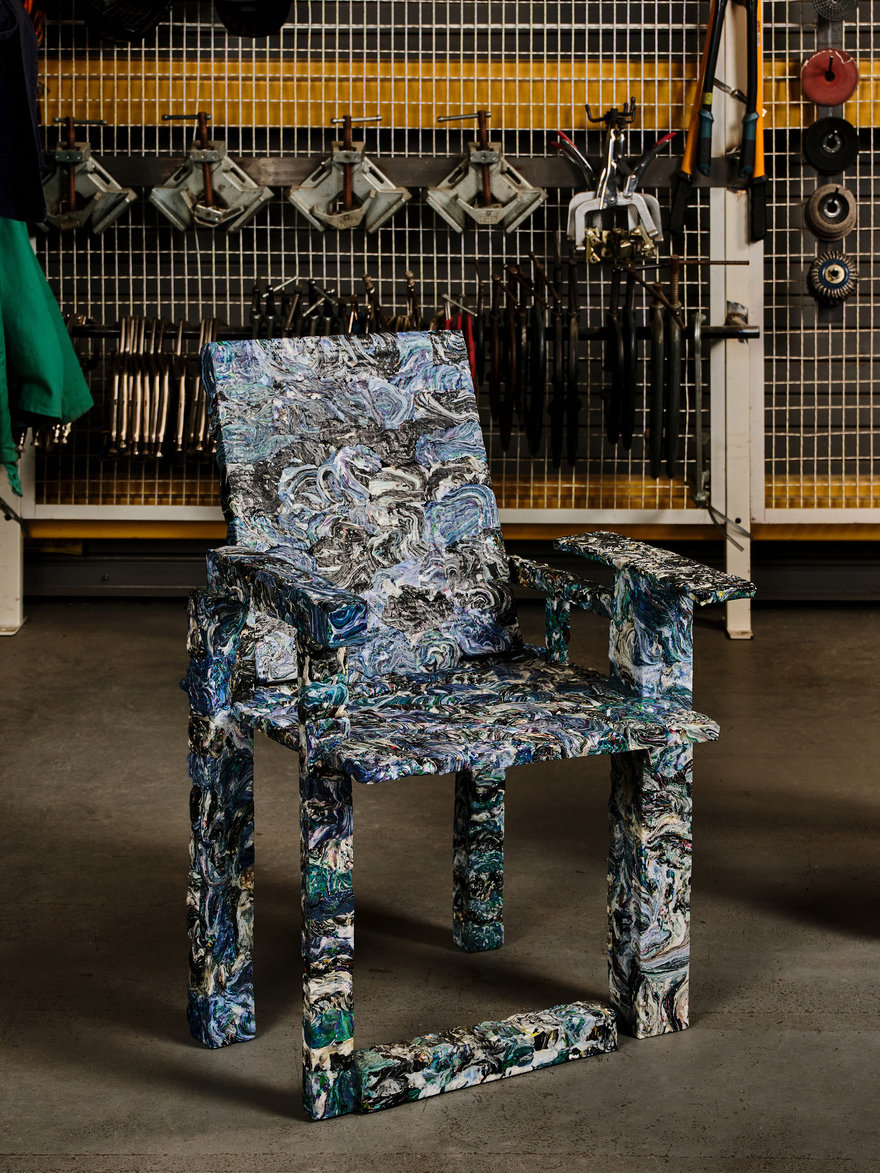
Vincent – hand-shaped recycled plastic forms fused into a sculptural Adirondack, with joinery hidden beneath swirling, marbled surfaces
© Andrew Thomas Lee
Vincent – hand-shaped recycled plastic forms fused into a sculptural Adirondack, with joinery hidden beneath swirling, marbled surfaces
 © Andrew Thomas Lee
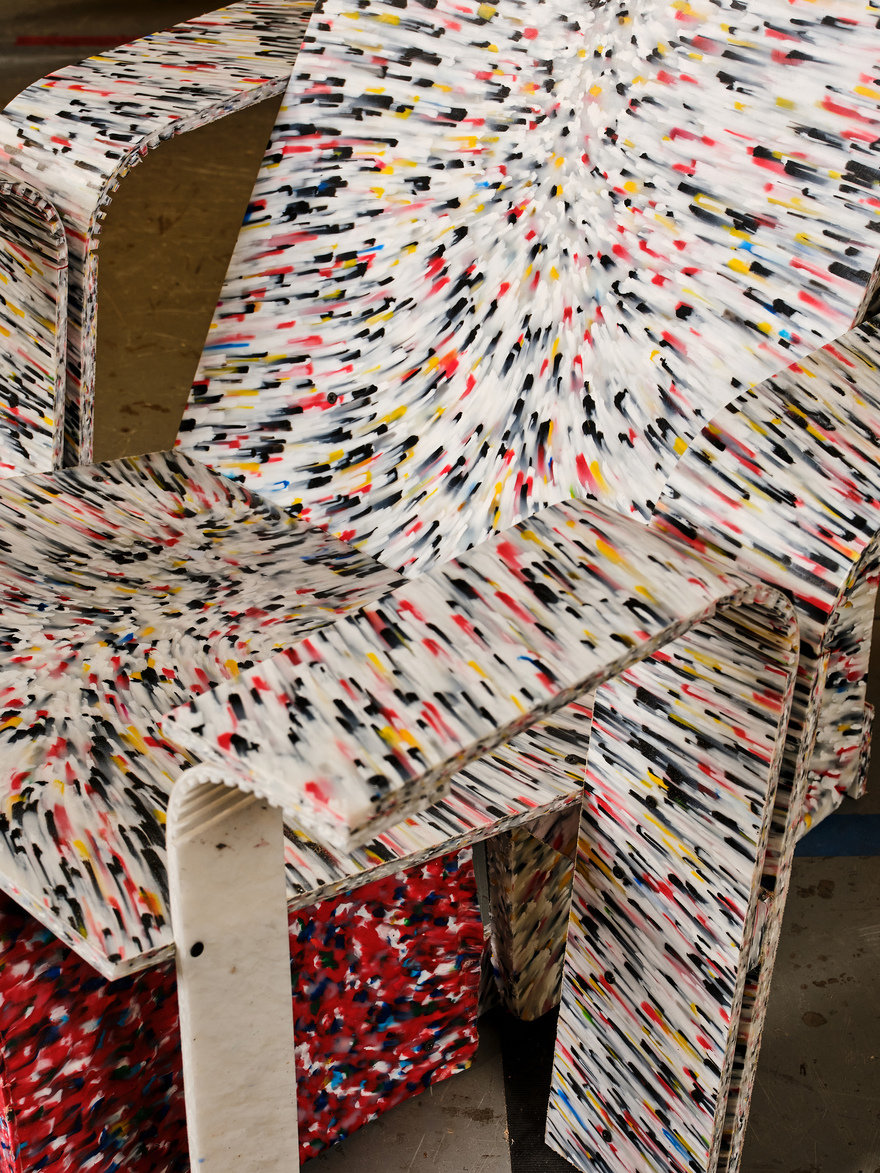
Plastic Pressure – chair formed from heat-pressed recycled plastic panels, showcasing patterns shaped by thermoplastic behavior under pressure
© Andrew Thomas Lee
Plastic Pressure – chair formed from heat-pressed recycled plastic panels, showcasing patterns shaped by thermoplastic behavior under pressure
 © Andrew Thomas Lee
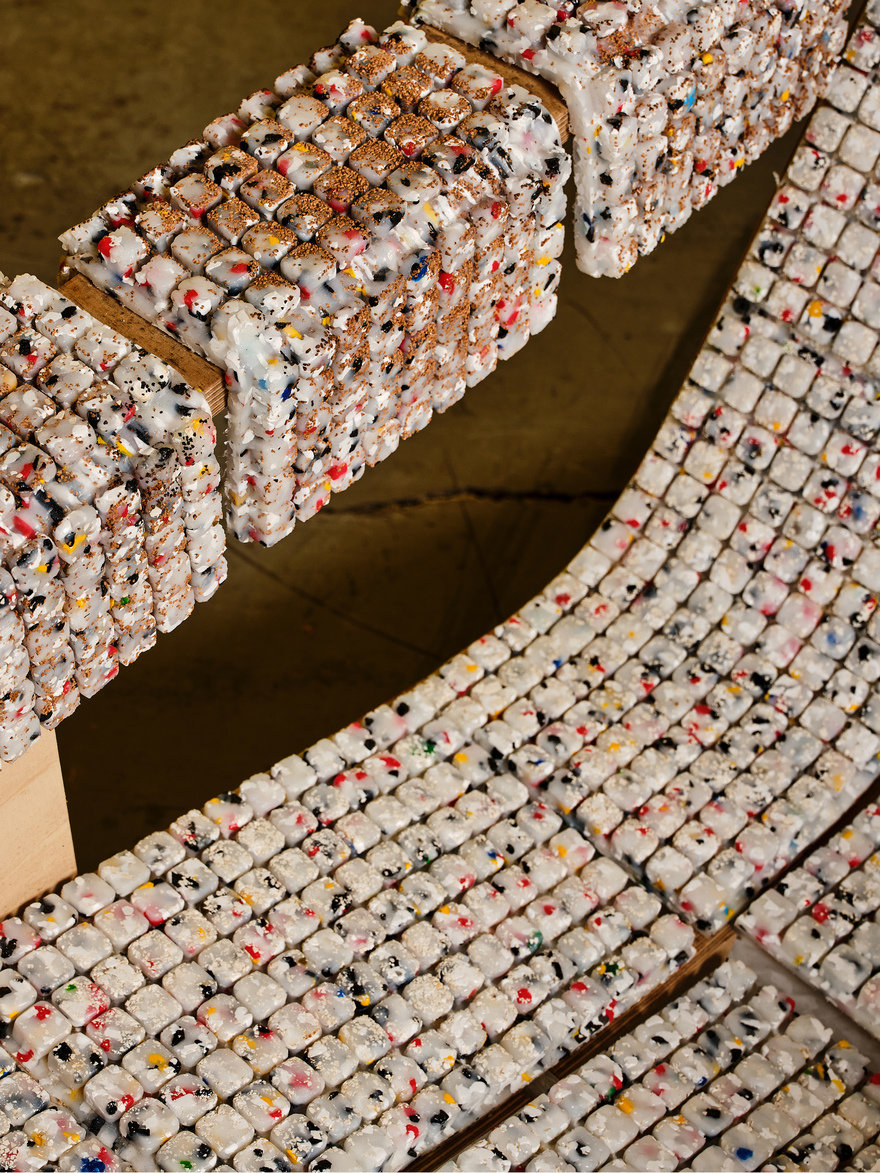
PlasticShell – contrast layers recycled HDPE cubes with sand and stone grit, creating a tactile surface where smooth plastic meets raw, granular textures
© Andrew Thomas Lee
PlasticShell – contrast layers recycled HDPE cubes with sand and stone grit, creating a tactile surface where smooth plastic meets raw, granular textures
Plastic Reimagined is a design–research project that treats recycled plastic not as a symbolic gesture of sustainability, but as a material system embedded within civic, logistical, and educational infrastructures. Developed through a graduate design–research studio at Georgia Tech's School of Architecture and led by Assistant Professor Hyojin Kwon, founder of the research-oriented practice Pre– and Post–, the project transforms post-consumer plastic waste into full-scale civic seating prototypes.
The project was first exhibited at Atlanta Contemporary (June–September 2025), where a series of Adirondack chairs and collective seating elements were presented as both design artifacts and material propositions. Installed within the gallery, the work framed recycled plastic not as a finished product, but as an evolving system—linking waste streams, fabrication processes, and public use.
From there, Plastic Reimagined expanded beyond the institutional gallery into site-based public activation during SITE 2025 at the Goat Farm Arts Center in Atlanta. Installed across the Goat Farm's 12-acre property during the one-night arts festival, the chairs were encountered by over 4,000 visitors as part of an immersive landscape of performances, installations, and sound works. In this context, the project operated as a temporary civic instrument—inviting sitting, touching, and informal gathering within a dense field of cultural production.
Following SITE, Plastic Reimagined transitioned into a long-term civic setting as part of TRANSPORT | Transform | TRANSCEND, a year-long exhibition partnership between Georgia Tech Arts and Hartsfield–Jackson Atlanta International Airport. Installed in Terminal T and on view through November 2026, the project now occupies one of five dedicated exhibition booths alongside works by artists and researchers across robotics, sound art, computation, and material design.
Across all iterations, the project was developed through a material-first pedagogy. Graduate students worked directly with post-consumer HDPE and PLA plastics collected from campus waste streams, makerspaces, and regional recycling partners. Rather than beginning with form, the studio began with infrastructure—mapping how plastic circulates through institutional systems, where it fails, and how it might be redirected.
The material was washed, shredded, pressed, milled, extruded, and cast using a hybrid workflow that combined low-tech, hands-on processes with CNC routing, sheet pressing, custom molds, and computational modeling. Shrinkage, warping, color marbling, and surface irregularities—often treated as defects—were preserved as evidence of the material's previous life. These characteristics became a design language rather than something to erase.
The Adirondack chair served as a typological scaffold for the project. Chosen for its cultural familiarity and association with leisure and collective outdoor space, the chair allowed students to translate material research into a recognizable civic object. The resulting pieces operate somewhere between furniture, architectural fragment, and public prototype—testing how recycled plastic might perform structurally, visually, and socially at a human scale.
In the airport context, the work shifts once again—from event-based installation to infrastructural presence. Millions of travelers encounter the chairs not as an art destination, but as part of the everyday choreography of waiting, moving, and resting. Here, durability, tactility, and legibility become essential, as engagement unfolds in passing rather than pause.
Across its transitions—from gallery to festival to global transit hub—Plastic Reimagined argues for sustainability as infrastructural literacy rather than aesthetic signaling. By situating student work within both cultural institutions and civic infrastructure, the project reframes design-build pedagogy as a public practice with lasting material and social consequences.
Ultimately, Plastic Reimagined asks a simple but persistent question:
What if waste were not the end of a material's story, but the beginning of its civic life?
-
o2Favorite This
-
QComment
Share your thoughts
K
{Welcome
Create a Core77 Account
Already have an account? Sign In
By creating a Core77 account you confirm that you accept the Terms of Use
K
Reset Password
Please enter your email and we will send an email to reset your password.