
e
Industrial Design Student Work: Emergency Housing from Simple PVC Pipes
CINTRE, by Baptiste Marx of ENSCI
This CINTRE project is by Baptiste Marx, done when he was pursuing his Masters of Industrial Design at France's ENSCI. Marx's pre-ID degree was in "composite materials project management," and both disciplines inform his approach.
"I base my practice on contextualized object design," he writes. "Sensitive to an aesthetic resulting from materials and manufacturing processes, I favor an experimental and reflective approach, where research occupies a central place. Between sensitive and technical creations, I seek to develop a multidisciplinary and conscious design."
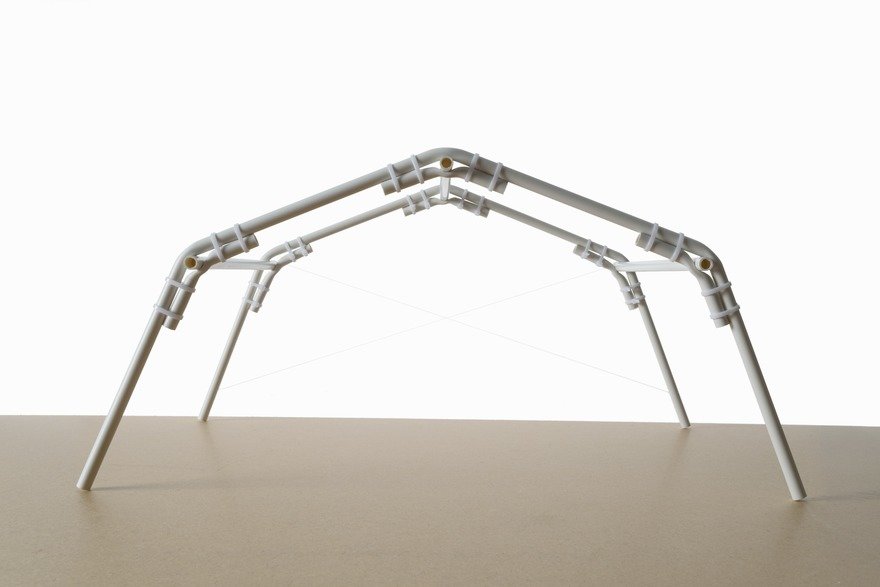
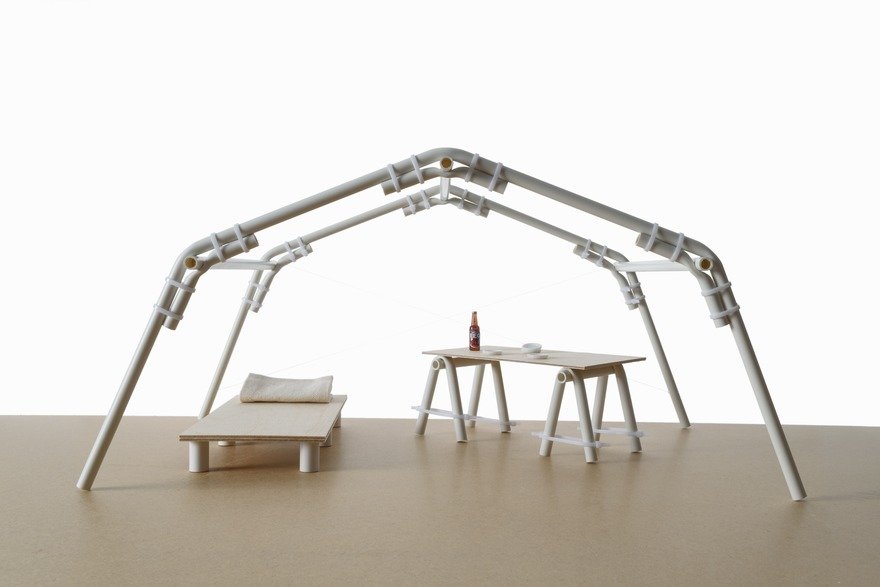
CINTRE is part of an approach to designing emergency housing, intended to respond to crisis situations following natural disasters or those linked to conflict. In a context where sustainable reconstruction is delayed, if not impossible, shelter becomes an immediate necessity. CINTRE responds to this emergency by offering a system that allows shelters to be built quickly while guaranteeing long-term safety and dignity.
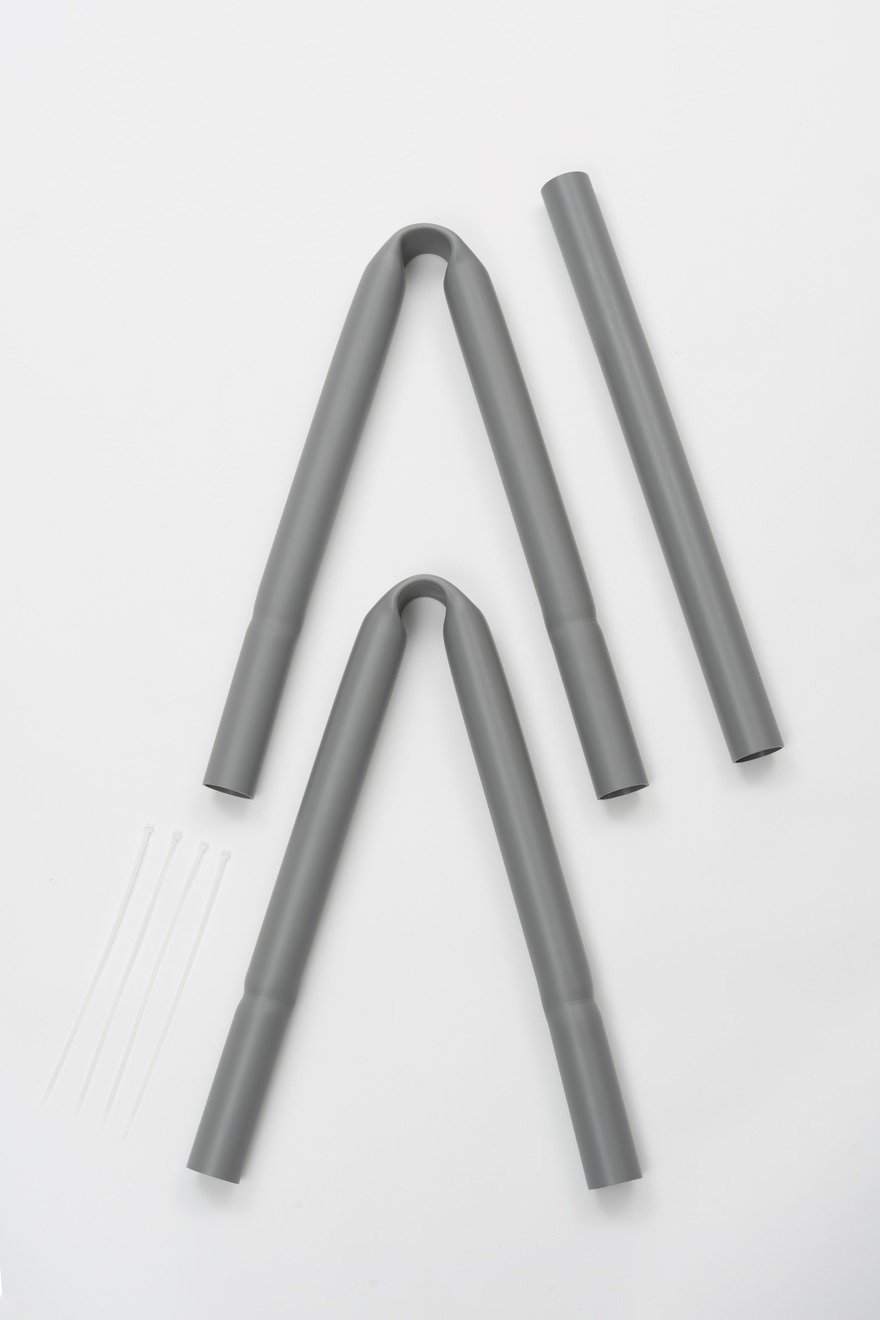
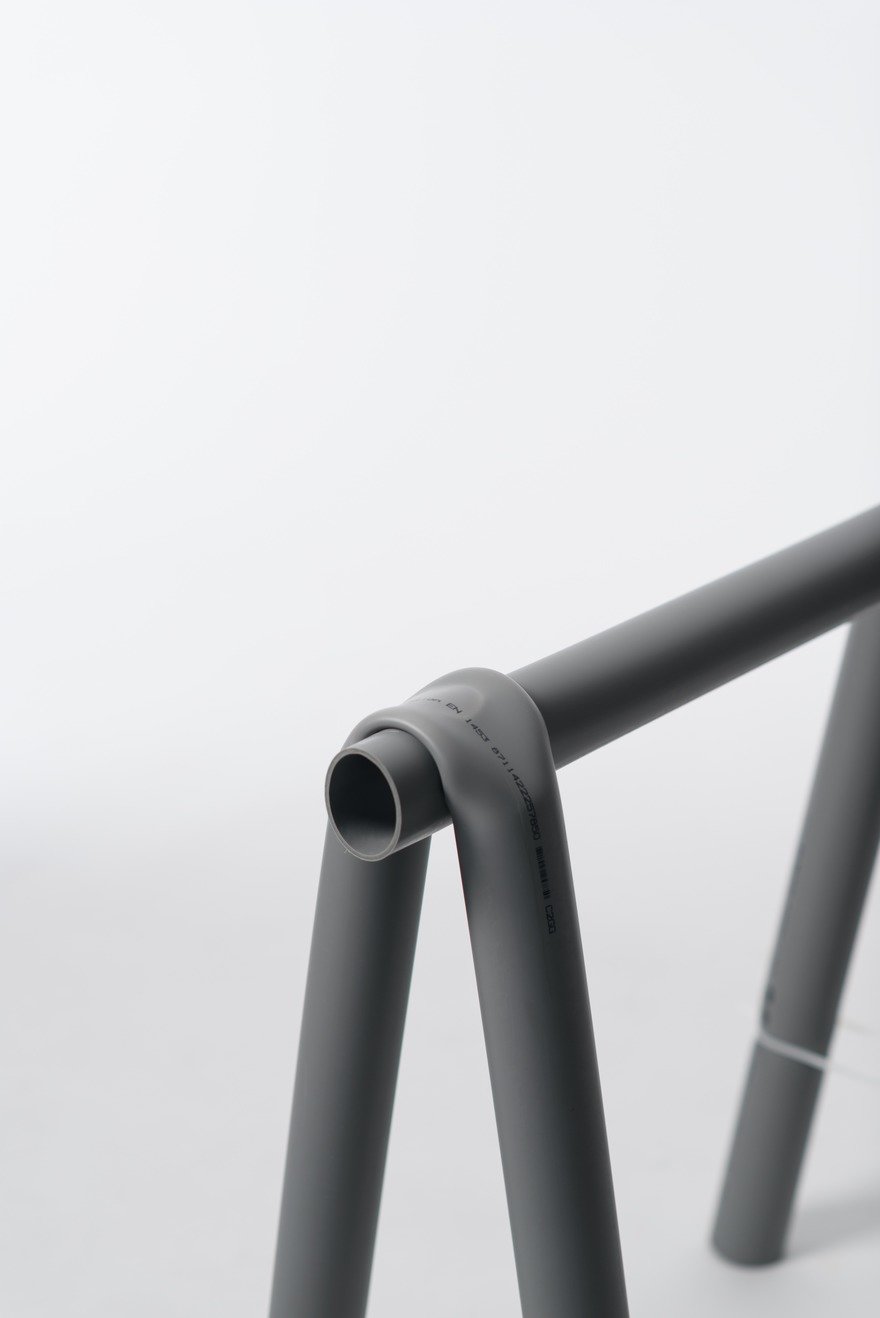
Using a process of hot bending PVC tubes, CINTRE offers simple and structural assemblies, allowing the interior and exterior construction of shelters in emergency situations. Resistant to moisture and corrosion thanks to its intrinsic properties, PVC pipe is a resource frequently available at disaster sites, where it can be recovered and reused. Lightweight, modular, and easy to transform without heavy tools or specialized know-how, PVC lends itself to rapid implementation. Hose clamps (flex clamps), used as a joining system, are a robust, economical, and easy-to-deploy solution for large-scale humanitarian missions.
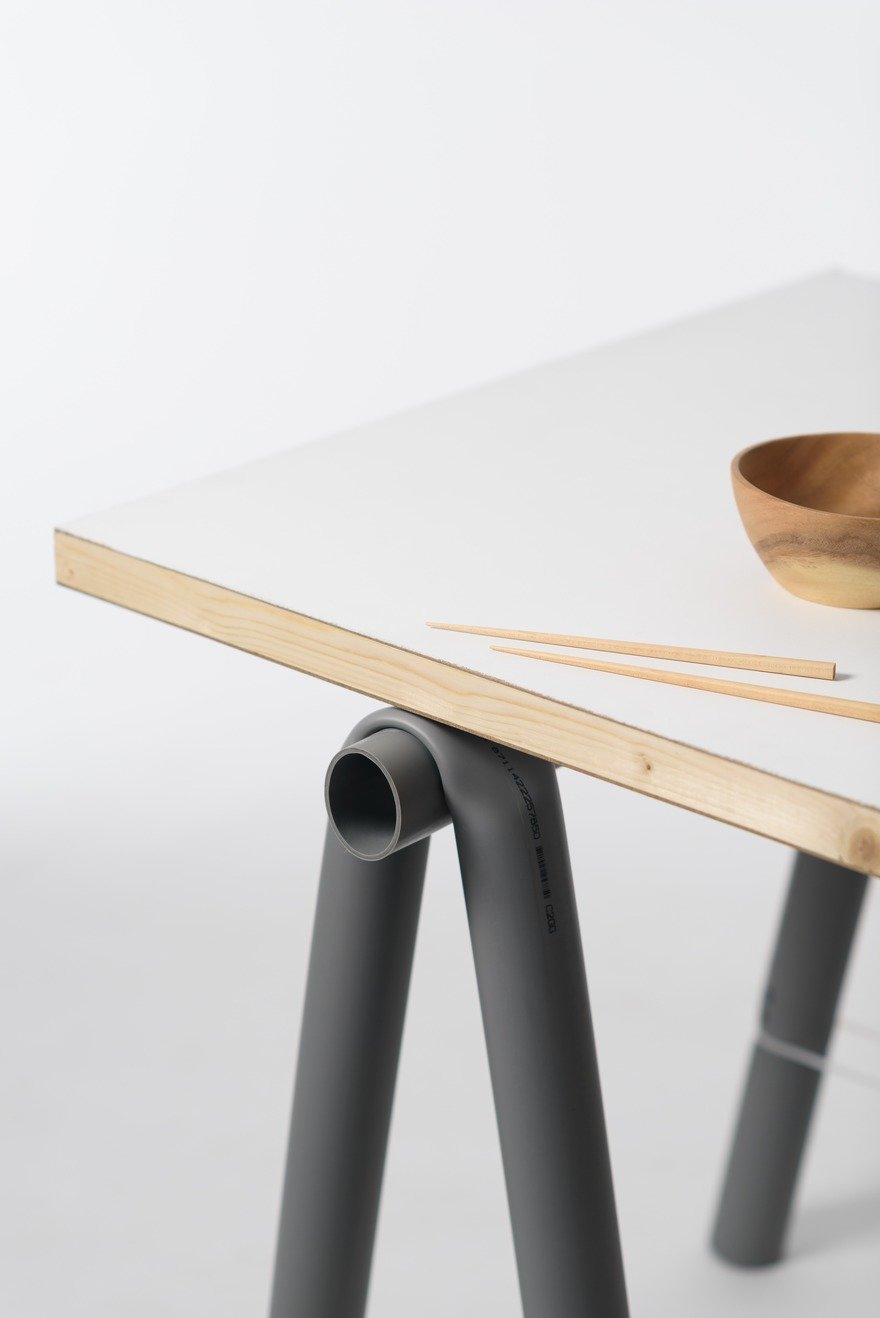
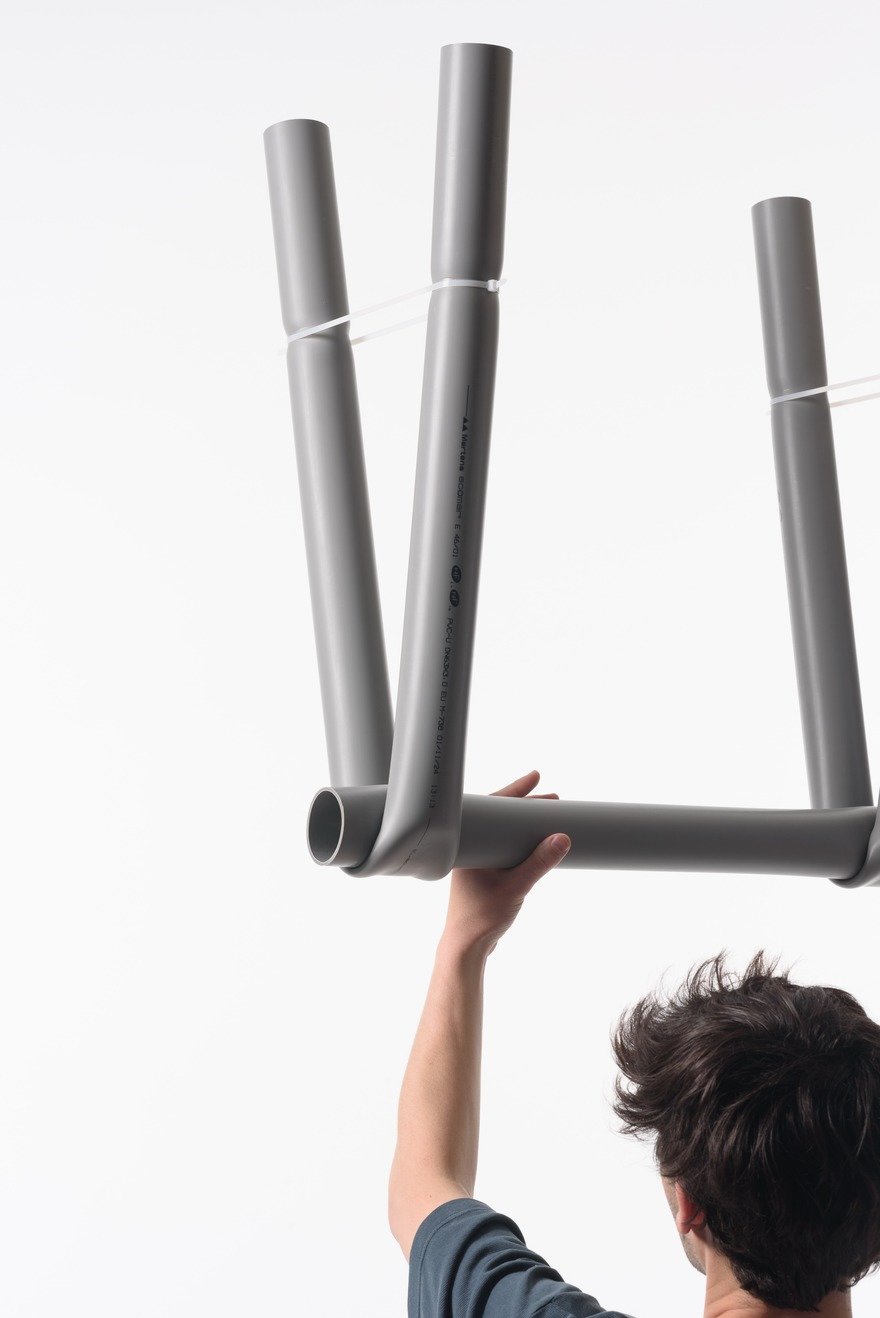
CINTRE is not a fixed solution: it is an exploratory project aimed at encouraging the emergence of new types of emergency housing. Its purpose is to be appropriated, adapted, and enriched by the people concerned, in order to best respond to local realities and specific needs.
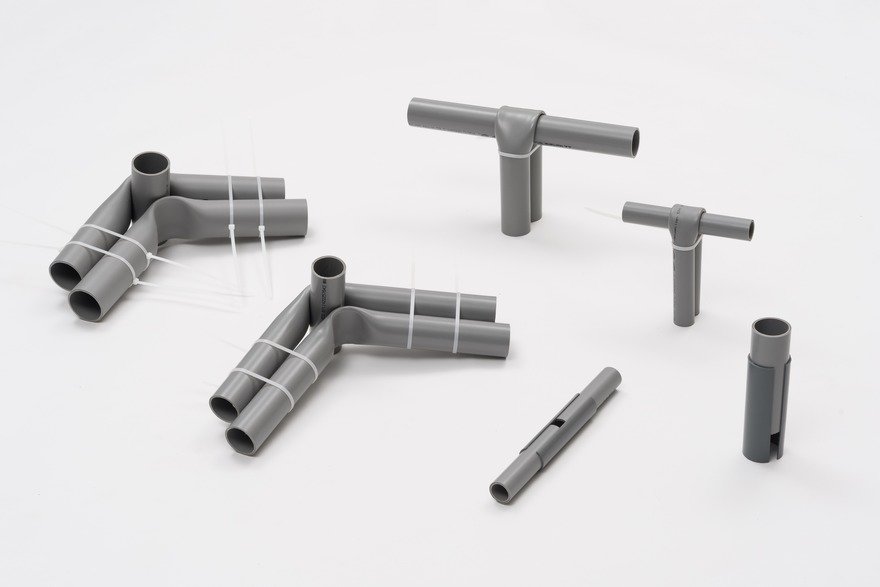
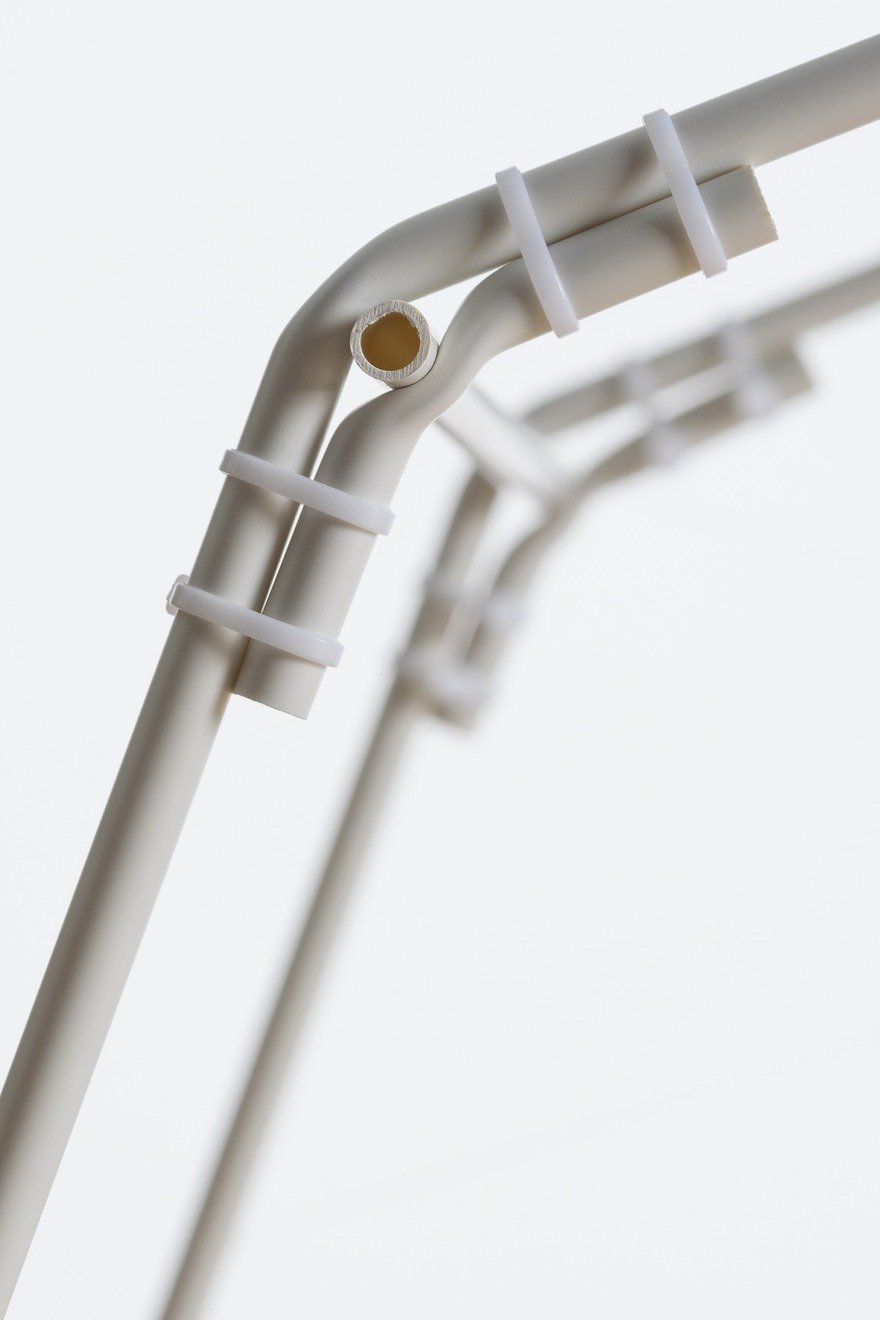
Developed in partnership with the French Red Cross, CINTRE is intended to be a tool serving affected populations, to be activated in various contexts and aspires to be part of a collaborative approach.
-
o5Favorite This
-
Q5Comment
Directory Company Profiles

Core77
Industrial Design
Resources
Industrial Design
Resources
-
Core77 Directory
Find the Best Industrial Design CompaniesGo -
Hatch Duo, LLC
Founded by an award-winning team with over 20 years of combined product design experience, Hatch Duo...
-
ECCO Design
ECCO Design is a full service product design and innovation firm. We are a team of designers, resear...
-
andesignlab
ANDESIGN is an industrial design consultancy based in Orange County California and Austin Texas. AN...
-
DesignStein Studios, LLC
We are a team of industrial designers focused on developing products that are intended for tooling a...
-
Bluemap Design
BlueMap design is a multi-disciplinary product development firm. Founded by Simon Yan in 2001, the f...
-
Fahrenheit Design
Fahrenheit is an award-winning product design and innovation firm based in Austin, Texas. Since 2002...
-
RMT PRODUCTS LIMITED.
RMT PRODUCTS CO. , LTD. provide on-time delivery, high-quality prototyping and manufacturing . It i...
K
{Welcome
Create a Core77 Account
Already have an account? Sign In
By creating a Core77 account you confirm that you accept the Terms of Use
K
Reset Password
Please enter your email and we will send an email to reset your password.
Comments
"I favor an experimental and reflective approach..." - Ha! That's the fanciest way of saying "f*** around and find out" that I've ever seen!
This seems way more cumbersome than just adding bent connectors..... Also once bent, that part can only be used for that structure. Using a collection of straight pieces and connectors allows more freedom to change the design. This seems silly....
In some emergency situations, adapting what is on hand may be necessary. The fact that they are using the same material for both the structure and connectors may be useful. Once bent, the same piece could be bend again with heat.
I do however, question the use of zip ties. Perhaps testing this with easily scrounged and cheap rope might be called for.
Fair point, but it also requires you to have a bunch of straight, 10ft poles laying around. One could argue that you'd be more likely to find smaller pieces to attached together with pre-bent joints. This also requires some fancy bending skills, especially for the angled pieces which need to be bent to the exact same angle as the frame pipes, and also have a concave area for the second pipe to pass through. (probably requiring a jig of sorts). Again, not super easy to make and not very practical.
Kudos! I love repurposing ubiquitous materials like conduit.