
e
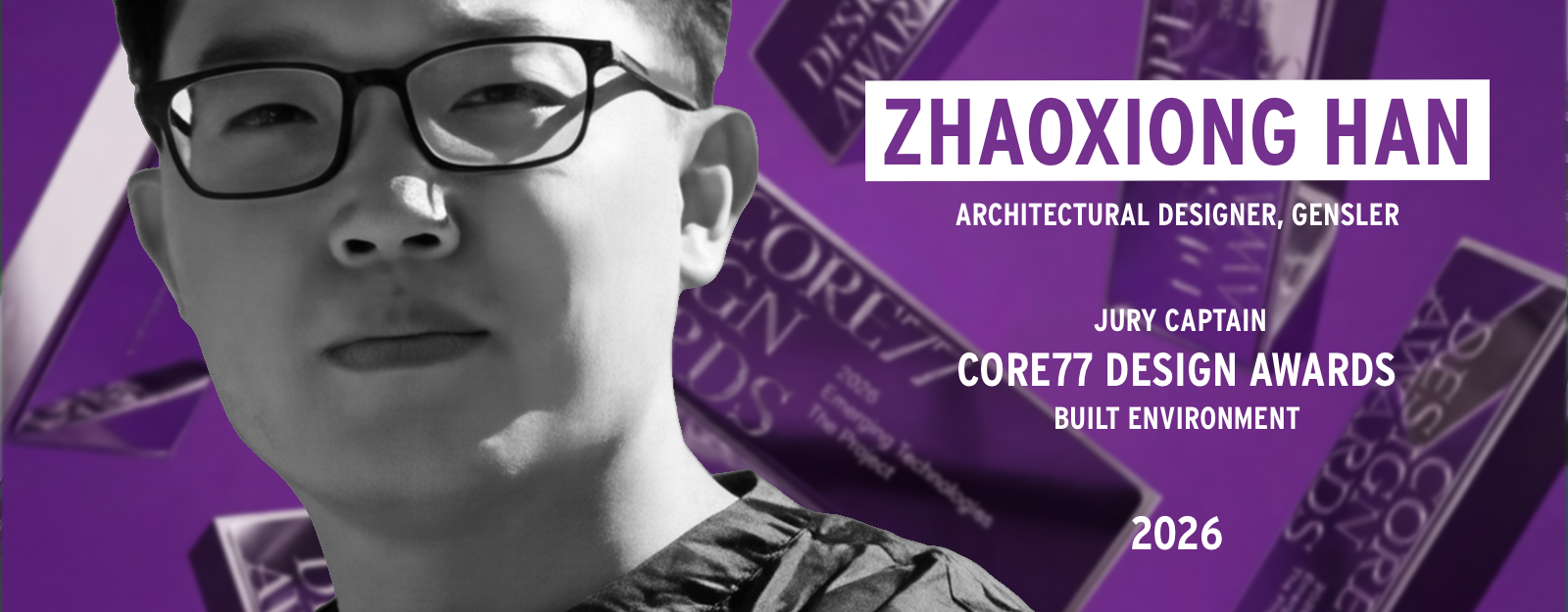
Gensler's Zhaoxiong Han on Architecture's Power to Connect
The 2026 Built Environment jury captain discusses meaningful spatial relationships, adaptive reuse, and why clarity of intention matters most
The Core77 Design Awards Built Environment category features human-made surroundings that provide the setting for people's activities. Spatial and physical structures, interiors, exhibitions, or installations, either permanent or temporary, for private, public, commercial, or industrial purposes. Examples include public installations, restaurant/hospitality interiors, office or medical interiors, set designs, retail displays, exhibition booths.
Architectural designer Zhaoxiong Han understands that architecture's greatest power lies in its ability to shape human connection. "I'm most excited about the ability of architecture to shape how people relate to each other and to the places they inhabit," he says. "Every project is an opportunity to understand context, interpret culture, and create environments that support meaningful daily life."
Based in Gensler's Los Angeles office, Zhaoxiong brings this philosophy to a diverse portfolio spanning core and shell office buildings, workplace design, education projects, and adaptive reuse. His particular interest centers on how architecture can renew existing contexts while forming meaningful cultural and spatial relationships—a perspective that has made him a sought-after voice in the design community.
Beyond his practice work, Zhaoxiong contributes to the broader architectural discourse as a juror for international competitions including TerraViva and Archiol. This ongoing engagement allows him to remain attentive to evolving cultural and environmental questions while helping shape conversations that define contemporary architectural practice.
As jury captain for the 2026 Core77 Design Awards, Zhaoxiong brings a critical eye informed by both hands-on practice and competitive evaluation. He finds the design process most rewarding when it "deepens our connection to place and expands the ways we experience and share space."
Context Over Convenience
His biggest concern in the design world reflects a tension many practitioners are grappling with today. "I'm concerned that the rapid adoption of AI may encourage designers to rely on generated form-making before fully understanding context, users, and purpose," says Zhaoxiong. "The tool itself is not the issue—AI can be incredibly powerful—but design risks losing depth when decisions are made too quickly. Architecture still requires judgment, interpretation, and understanding of human experience, which no model can replace."
To Core77 Design Awards entrants, Zhaoxiong emphasizes clarity of purpose above all: "Be clear about what the design or project is trying to do, and why. Strong work is grounded in a precise understanding of context, users, and intentions."
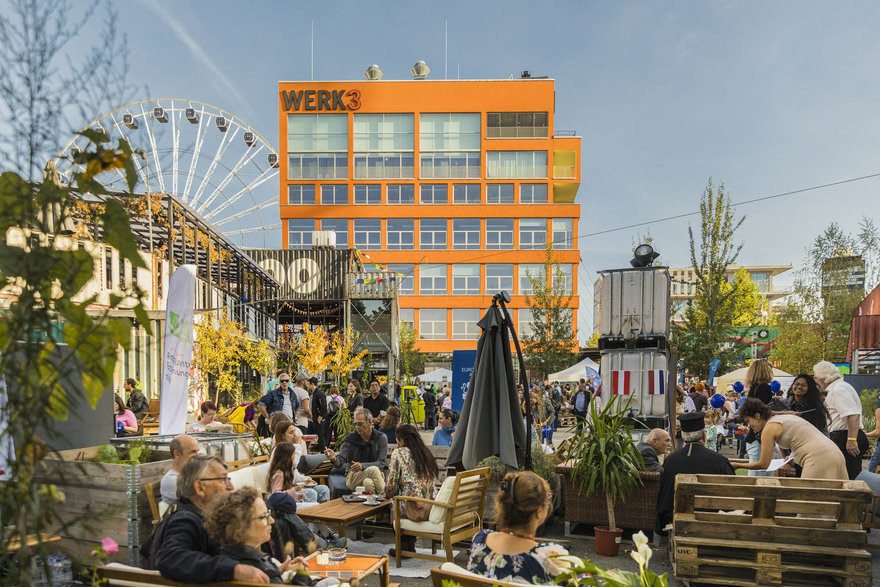
The 2025 professional winner in the Built Environment category was the WERKSVIERTEL MUNICH project designed by Johannes Ernst at Steidle Architekten. WERKSVIERTEL was previously an industrial site which has been transformed into an independent quarter for residential, commercial, social, and cultural activities with open public spaces for events and other forms of entertainment.
If you have a forward-thinking idea that could spark a fire with our jurors, share it with us through the 2026 Core77 Design Awards.
Enter the C77DA before January 30 to lock in early bird pricing.
-
o2Favorite This
-
QComment
Share your thoughts
Directory Company Profiles

Core77
Industrial Design
Resources
Industrial Design
Resources
-
Core77 Directory
Find the Best Industrial Design CompaniesGo -
Hatch Duo, LLC
Founded by an award-winning team with over 20 years of combined product design experience, Hatch Duo...
-
ECCO Design
ECCO Design is a full service product design and innovation firm. We are a team of designers, resear...
-
andesignlab
ANDESIGN is an industrial design consultancy based in Orange County California and Austin Texas. AN...
-
DesignStein Studios, LLC
We are a team of industrial designers focused on developing products that are intended for tooling a...
-
Bluemap Design
BlueMap design is a multi-disciplinary product development firm. Founded by Simon Yan in 2001, the f...
-
Fahrenheit Design
Fahrenheit is an award-winning product design and innovation firm based in Austin, Texas. Since 2002...
-
RMT PRODUCTS LIMITED.
RMT PRODUCTS CO. , LTD. provide on-time delivery, high-quality prototyping and manufacturing . It i...
K
{Welcome
Create a Core77 Account
Already have an account? Sign In
By creating a Core77 account you confirm that you accept the Terms of Use
K
Reset Password
Please enter your email and we will send an email to reset your password.