
e
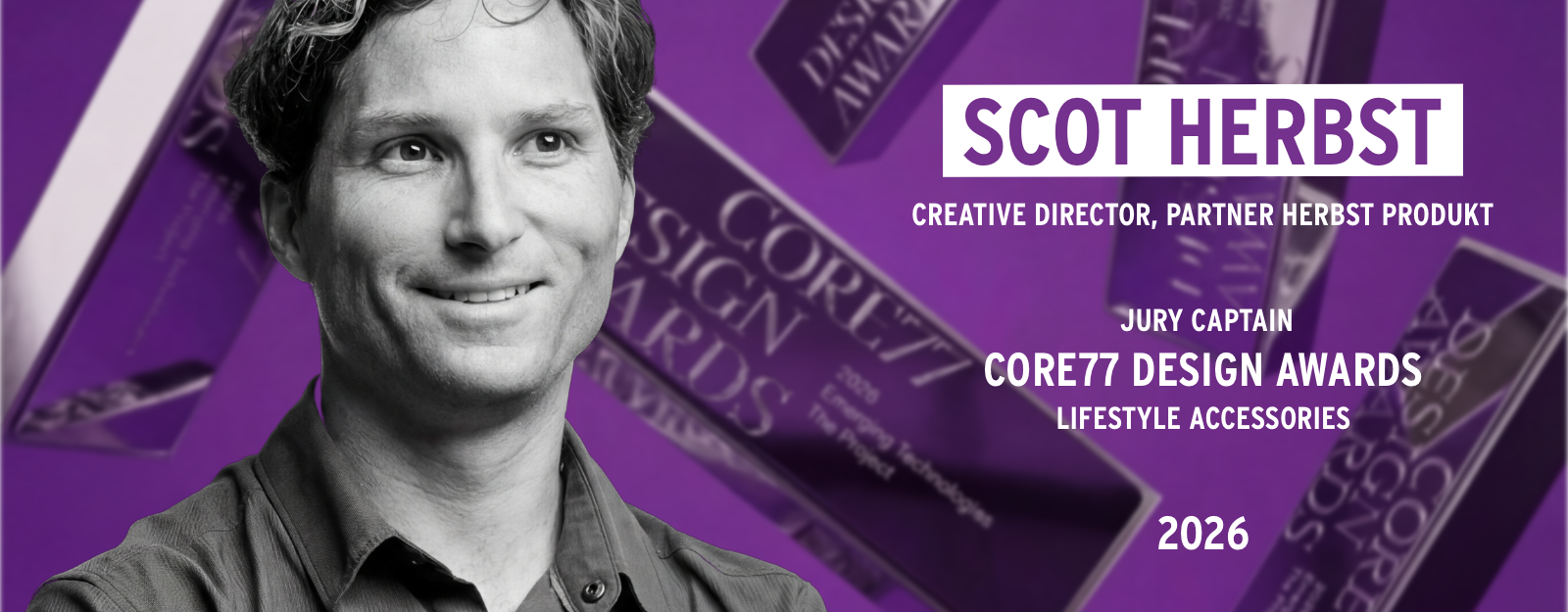
Core77 Design Awards 2026: Scot Herbst on the Continual Education of Design
The creative leader sees design as an artifact of problem-solving, and warns against losing connection to the real world
For Scot Herbst, the most compelling aspect of design practice isn't found in any single domain or deliverable. "Learning. New things. Every day. Medical, emerging technology, fabrication. The education design provides is intoxicating," he says. For someone who operates across a wide range of industries, from consumer technology to healthcare and lifesciences, consumer packaged goods, furniture, even autonomous vehicles, that appetite for continuous discovery is a structural necessity.
As Creative Director and Partner at Herbst Produkt, the design consultancy he created with his father, American design pioneer Walter Herbst, Scot leads a multidisciplinary team that includes industrial design, human factors, UX, digital, brand, packaging, engineering, and CGI. The studio's client roster spans nimble startups to Fortune 100 global brands including Google, Logitech, Brita, Crate & Barrel, Burt's Bees, Dolby, the Home Depot, and Clorox.
Over the years, Herbst Produkt has accumulated numerous global design awards and been featured in The Wall Street Journal, Business Week, Wired, Inc., and Fast Company. Their designs have been showcased in MoMA and numerous design exhibitions. In addition to his role at Herbst, Scot serves as Chief Product Officer at Slice Inc., an innovative brand of ceramic-bladed hardware that he helped build and grow before its recent acquisition.
The breadth of this work—from medical devices to autonomous vehicles—demands exactly the kind of relentless learning Scot describes. Each project operates under different constraints, different regulations, different user contexts. The education never stops.
Staying Grounded
When we asked Scot to describe one of his concerns for the field, his answer reveals an awareness of what gets lost when design becomes increasingly mediated by screens and simulations. "Losing our connection to the analog, tangible 'real world,'" he says simply.
It's a worry that carries particular weight coming from someone whose work spans emerging technologies and digital interfaces. The irony isn't lost: the tools that enable sophisticated design work can simultaneously distance designers from physical materials, manufacturing realities, and the tactile experience of objects in hands.
The Artifact of Problem-Solving
As jury captain for the Lifestyle Accessories category in the 2026 Core77 Design Awards, Scot will evaluate entries through a lens focused on fundamentals rather than flourish. His advice to entrants strips away everything extraneous.
"Focus on the problem being solved," Scot says. "The design is an artifact of that."
It's guidance that reframes how designers might present their work—not leading with formal innovation or aesthetic achievement, but with clarity about the problem at hand and how the solution emerged from genuine engagement with that problem. The design, in this view, becomes evidence of thinking rather than the thinking itself.
For a jury captain whose practice spans radical diversity of applications, this problem-first orientation makes sense. Good design for medical devices looks nothing like good design for consumer packaged goods—but both start with the same question: What problem needs solving?
2025 Winner
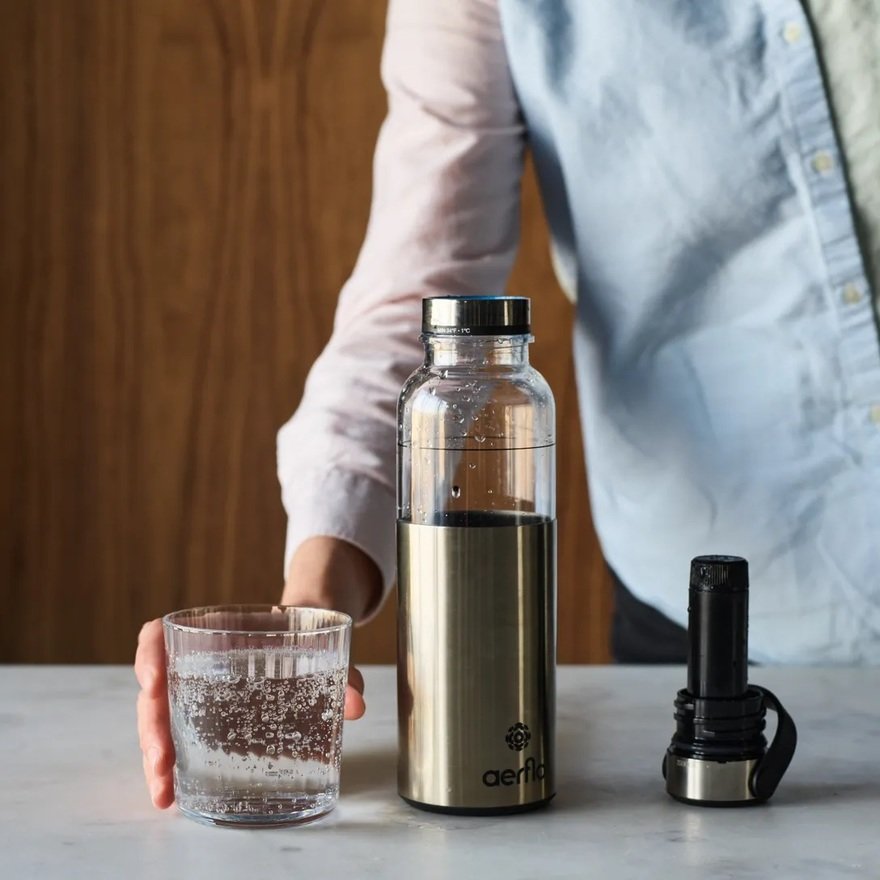
The 2025 Professional winner in Lifestyle Accessories is Aer1 System by Mark Wiggins in collaboration with Nathaniel Berman, JonPaul Turner, Scott Kingston, John Thorpe at Aerflo. The Aer1 system is a portable carbonation device consisting of three components: the Aer1 Carbonation Cap, the Aer1 Bottle, and the CO2 capsule. Users simply fill the bottle with water, load a capsule, and press the spritzing button at the top of the device to dispense CO2 and carbonate the water to their preference.
If you have a forward-thinking idea that could spark a fire with our jurors, share it with us through the 2026 Core77 Design Awards.
The final deadline to enter is March 28. Don't miss out - enter now!
-
oFavorite This
-
QComment
Share your thoughts
Directory Company Profiles

Core77
Industrial Design
Resources
Industrial Design
Resources
-
Core77 Directory
Find the Best Industrial Design CompaniesGo -
Hatch Duo, LLC
Founded by an award-winning team with over 20 years of combined product design experience, Hatch Duo...
-
ECCO Design
ECCO Design is a full service product design and innovation firm. We are a team of designers, resear...
-
andesignlab
ANDESIGN is an industrial design consultancy based in Orange County California and Austin Texas. AN...
-
DesignStein Studios, LLC
We are a team of industrial designers focused on developing products that are intended for tooling a...
-
Bluemap Design
BlueMap design is a multi-disciplinary product development firm. Founded by Simon Yan in 2001, the f...
-
Fahrenheit Design
Fahrenheit is an award-winning product design and innovation firm based in Austin, Texas. Since 2002...
-
RMT PRODUCTS LIMITED.
RMT PRODUCTS CO. , LTD. provide on-time delivery, high-quality prototyping and manufacturing . It i...
K
{Welcome
Create a Core77 Account
Already have an account? Sign In
By creating a Core77 account you confirm that you accept the Terms of Use
K
Reset Password
Please enter your email and we will send an email to reset your password.