
e
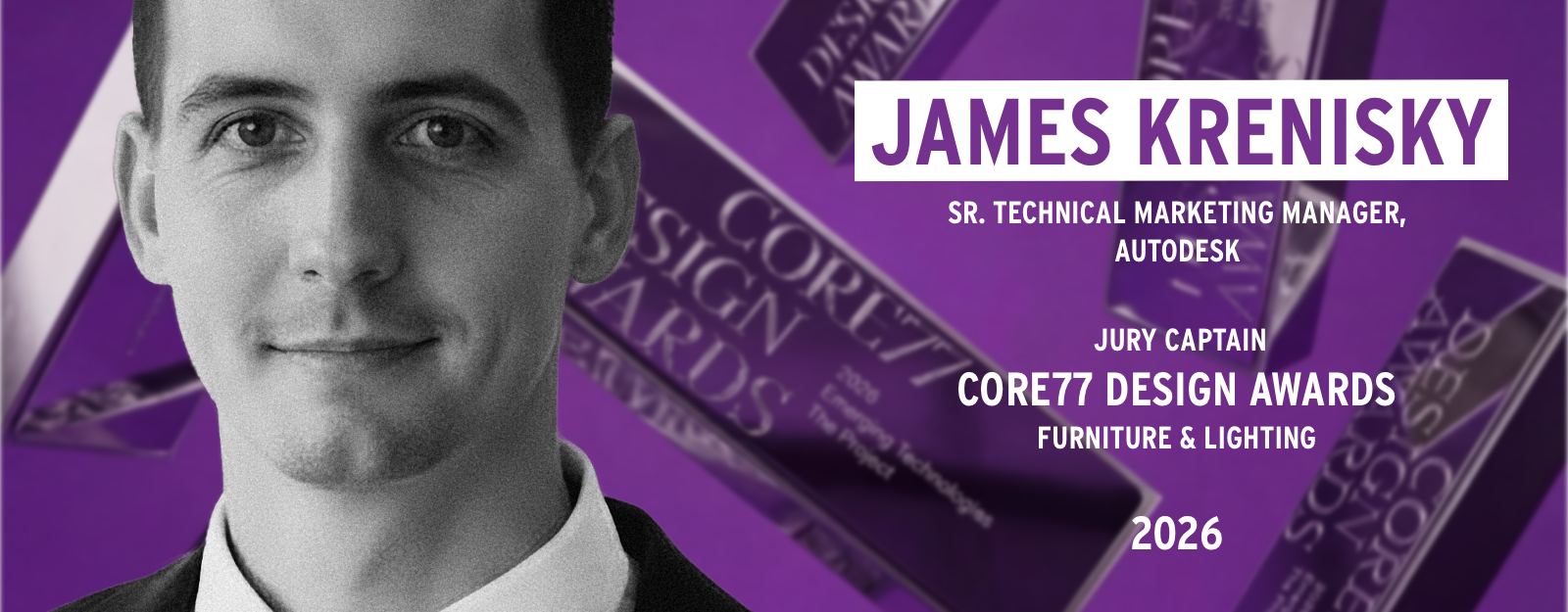
Core77 Design Awards 2026: James Krenisky on Design's Disappearing Walls
Breaking down silos between disciplines while still taking the time for thoughtful problem-solving
James Krenisky has watched the silos come down. As a mechanical engineer who began his career specializing in thermal design for high-performance lighting fixtures and now serves as Senior Technical Marketing Manager for Autodesk's Fusion and Inventor products, he's witnessed a fundamental shift in how products get made.
"What really gets me energized is how the walls between design, engineering, and manufacturing are disappearing," James says. "Teams are sharing the same workflows, the same language, the same data. It makes it so much easier to take an idea and turn it into something real without losing the original intent along the way."
Based in Greenville, South Carolina, James occupies a unique position that blends engineering expertise with product storytelling to support customer adoption and innovation. He understands product development from multiple angles—the technical constraints engineers navigate, the creative vision designers pursue, and the manufacturing realities that determine what's actually buildable. That convergence, enabled by shared tools and data, represents a sea change in how teams collaborate.
For James, the dissolution of these traditional boundaries isn't just about efficiency. It's about preserving the core idea as it moves from concept to production, maintaining fidelity between vision and execution.
Volume Over Value
Yet James sees a troubling counterforce emerging alongside these improvements in workflow integration. "I worry about the pressure to produce more...more concepts, more variations, more content possibly at the expense of clarity and purpose," he reflects. "Speed is great, but not if it pushes designers away from thoughtful problem solving or creativity."
It's a concern rooted in observing how tools that enable rapid iteration can inadvertently become engines of volume production—creating an environment where quantity crowds out the deliberate thinking that leads to meaningful innovation.
The Why Behind the What
As jury captain for the Furniture & Lighting category in the 2026 Core77 Design Awards, James will be evaluating entries with an eye toward substance over surface. His advice to entrants focuses on a distinction that separates adequate documentation from compelling communication.
"Go beyond describing what the product does," James says. "Make it clear why it matters. If you can articulate the real problem you tackled and why your approach is different or insightful then your project immediately stands out."
It's guidance that reflects his dual perspective as both engineer and marketer—someone who knows that technical achievement alone doesn't tell the whole story, and that the best work combines functional innovation with clear articulation of purpose and impact.
2025 Winner
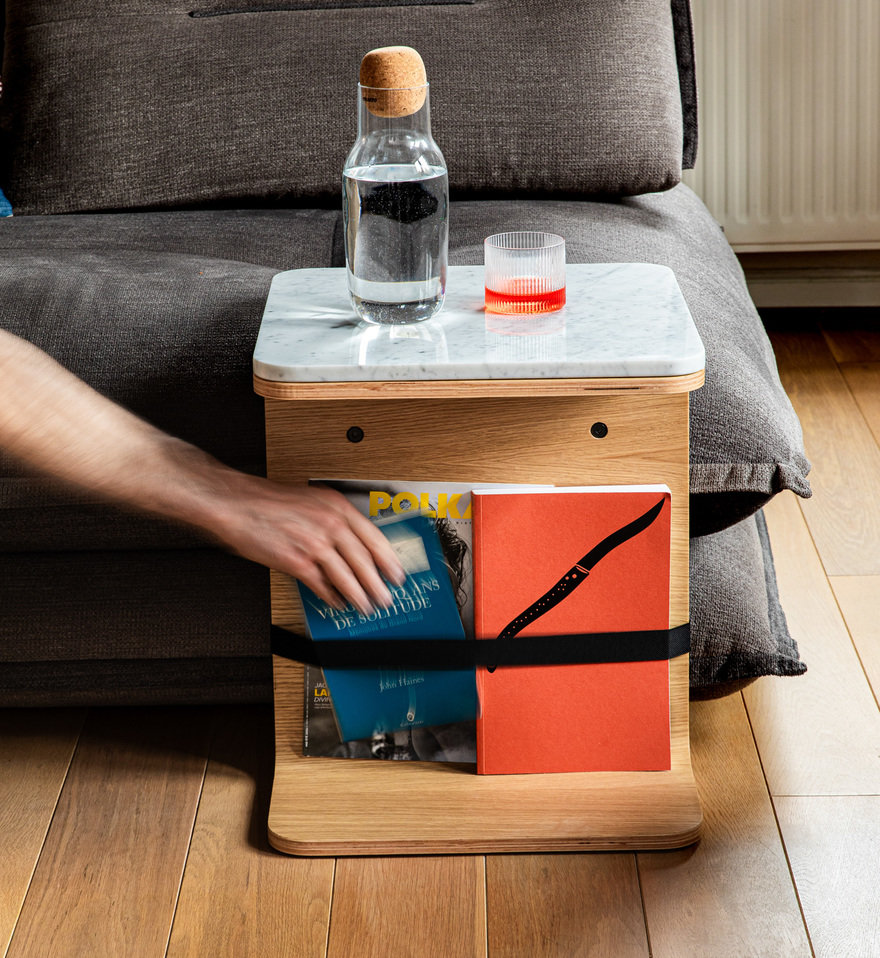
The 2025 Professional winner in Furniture & Lighting category was AGNI from Jose Cabrita at Contexte. This collection is based on a single element that can be used in different ways allowing that element to become a bench, a stool, a side table, or a shelf. The use of molded plywood allows manufacturing to make one mold that becomes multiple objects.
If you have a forward-thinking idea that could spark a fire with our jurors, share it with us through the 2026 Core77 Design Awards.
Enter the C77DA before February 27 to lock in regular pricing.
-
oFavorite This
-
QComment
Share your thoughts
Directory Company Profiles

Core77
Industrial Design
Resources
Industrial Design
Resources
-
Core77 Directory
Find the Best Industrial Design CompaniesGo -
Hatch Duo, LLC
Founded by an award-winning team with over 20 years of combined product design experience, Hatch Duo...
-
ECCO Design
ECCO Design is a full service product design and innovation firm. We are a team of designers, resear...
-
andesignlab
ANDESIGN is an industrial design consultancy based in Orange County California and Austin Texas. AN...
-
DesignStein Studios, LLC
We are a team of industrial designers focused on developing products that are intended for tooling a...
-
Bluemap Design
BlueMap design is a multi-disciplinary product development firm. Founded by Simon Yan in 2001, the f...
-
Fahrenheit Design
Fahrenheit is an award-winning product design and innovation firm based in Austin, Texas. Since 2002...
-
RMT PRODUCTS LIMITED.
RMT PRODUCTS CO. , LTD. provide on-time delivery, high-quality prototyping and manufacturing . It i...
K
{Welcome
Create a Core77 Account
Already have an account? Sign In
By creating a Core77 account you confirm that you accept the Terms of Use
K
Reset Password
Please enter your email and we will send an email to reset your password.