
e
A Designey Tri-Rotor Drone
The Aurora, by Alberto Essesi
Few of us would consider any rotor-based drone an objet d'esign. But this tri-rotor model, by L.A.-based industrial designer Alberto Essesi, suggests at least one client is willing to give a designer free rein.
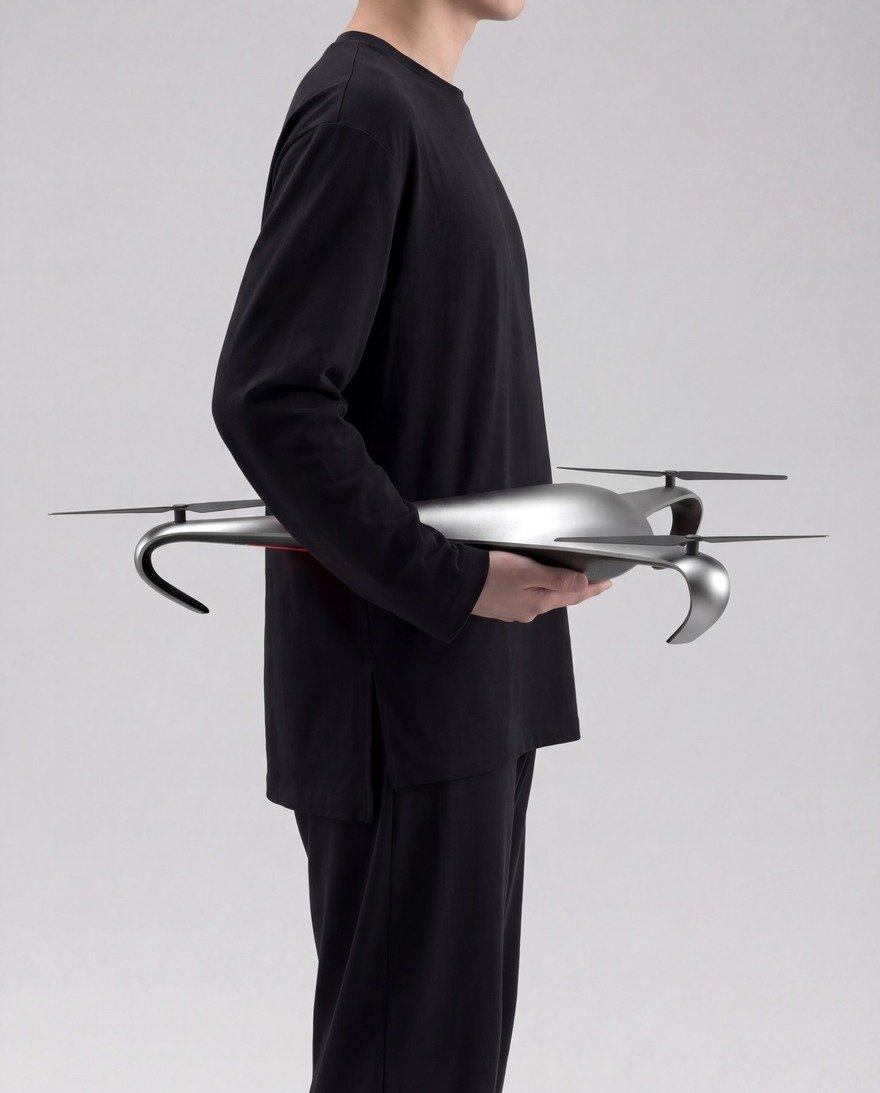
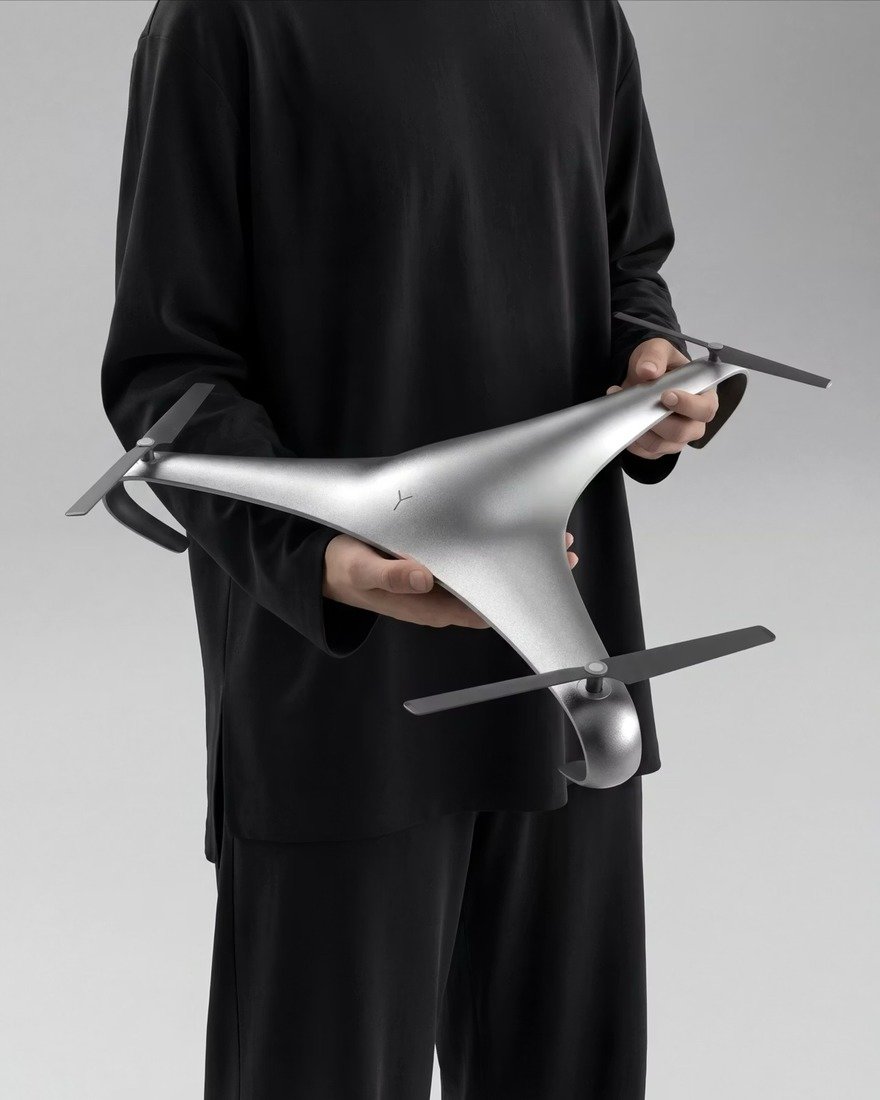
Essesi designed it "for an aerospace client who was looking to explore the boundaries of a tri-rotor drone that would focus on agility and power," he writes. "The result was an incredibly aerodynamic and organic form that is able to glide through the air while also being able to hover like a helicopter."
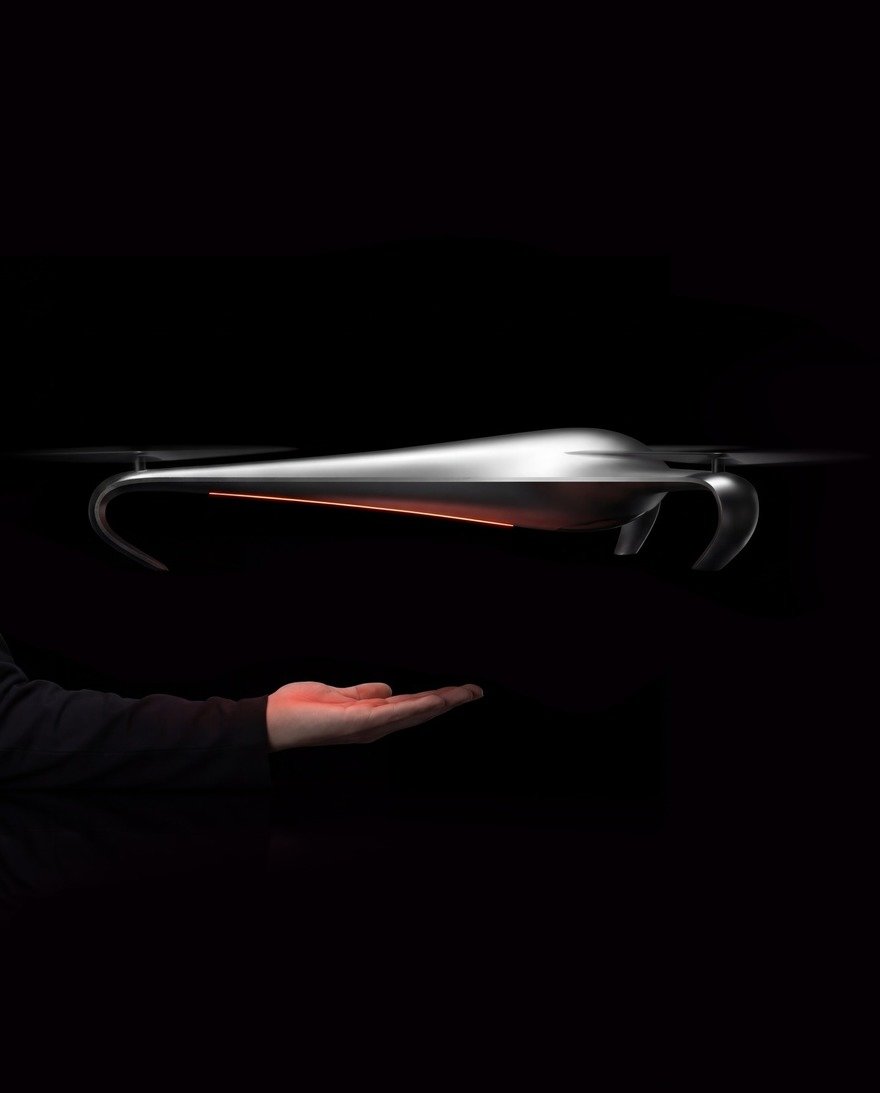
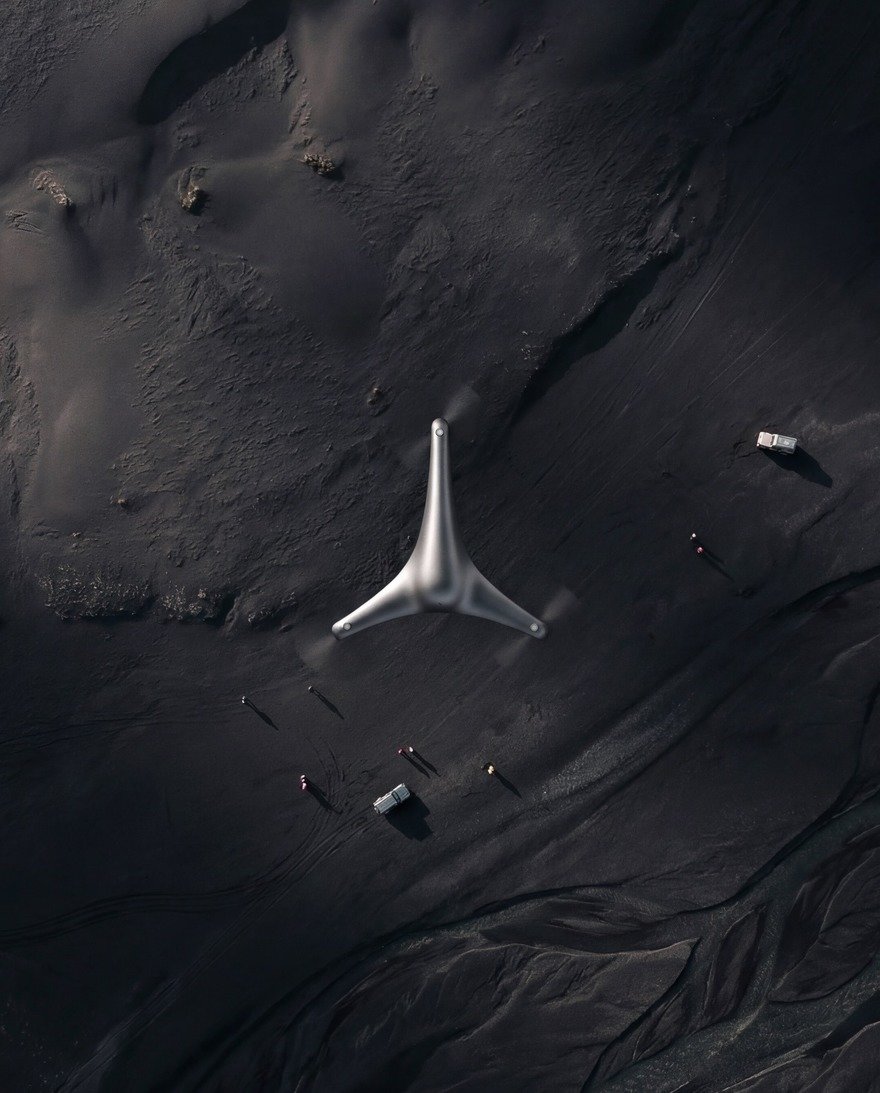
"The aerodynamic, organic shape is designed to optimize airflow, reducing drag and increasing lift. It seamlessly transitions between smooth gliding and helicopter-like hovering. The design utilizes lightweight composite materials and advanced rotor configurations to achieve high maneuverability and rapid response times, suitable for complex flight environments and dynamic operational demands.
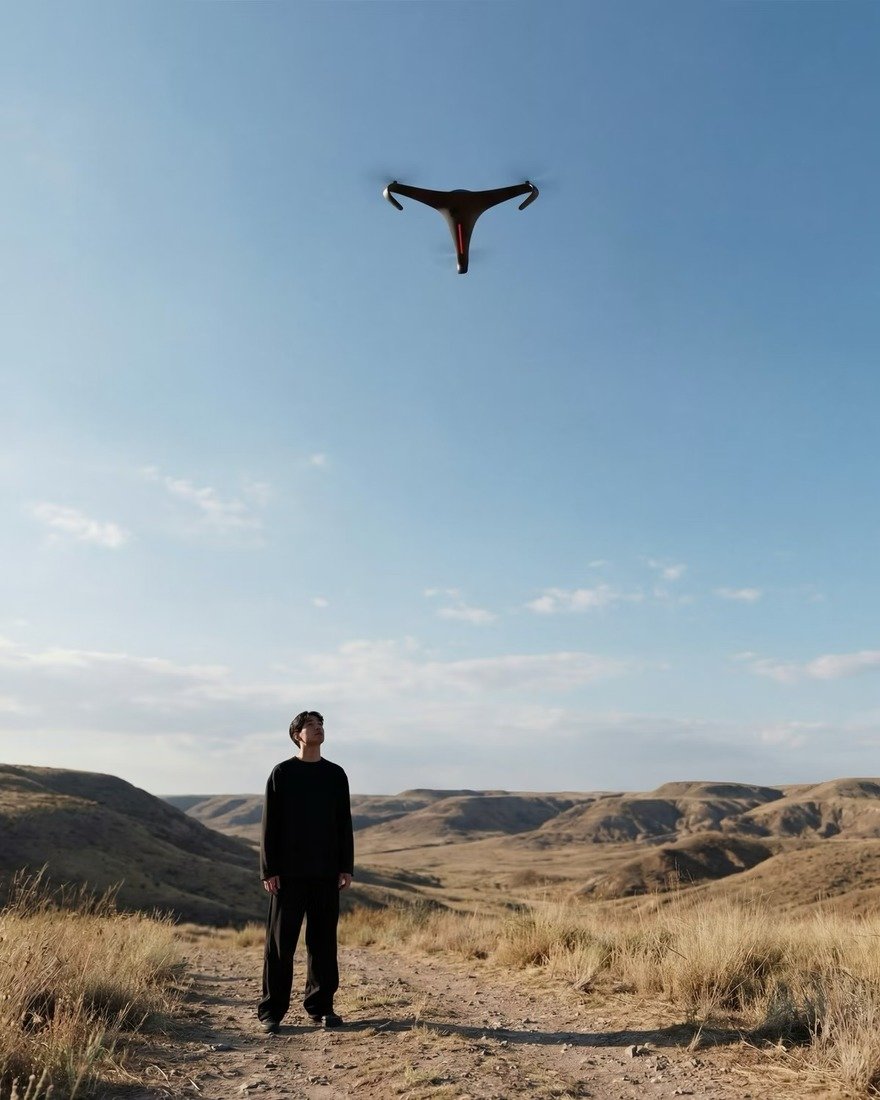
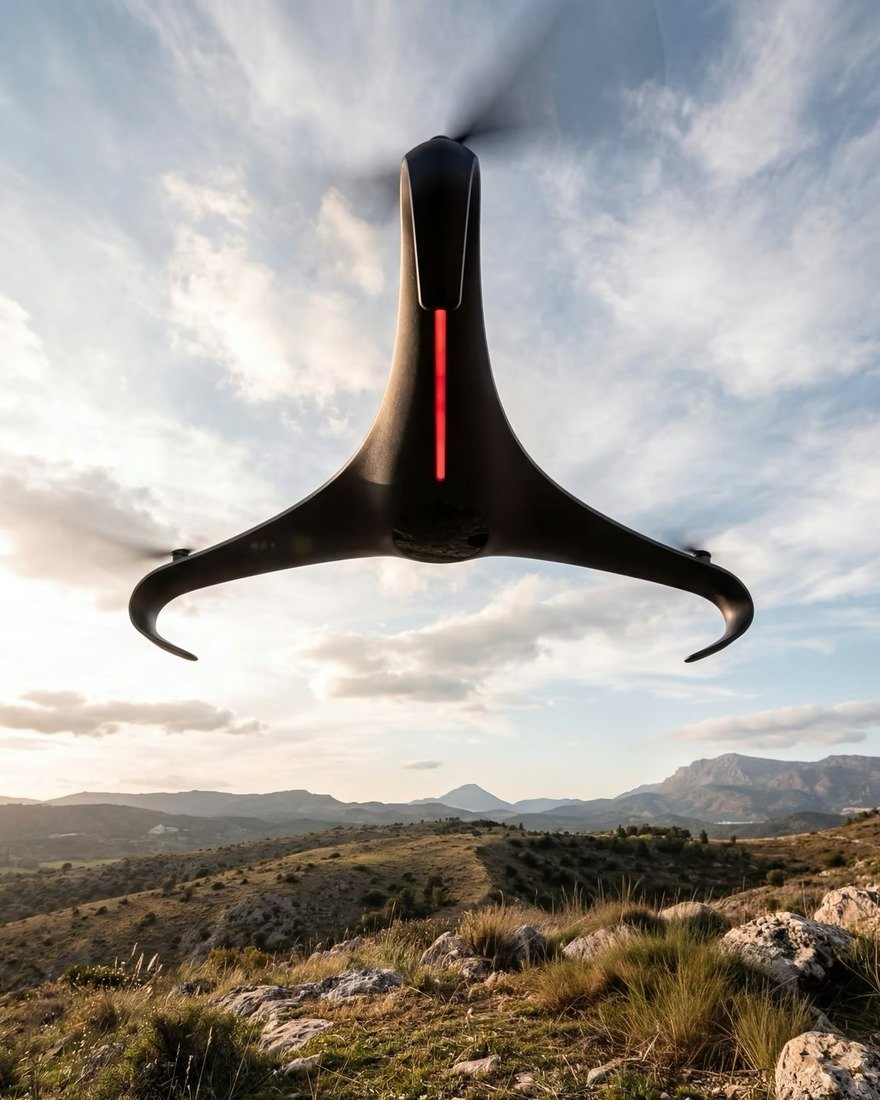
"Materials: Carbon-Fiber, plastic, aluminum."
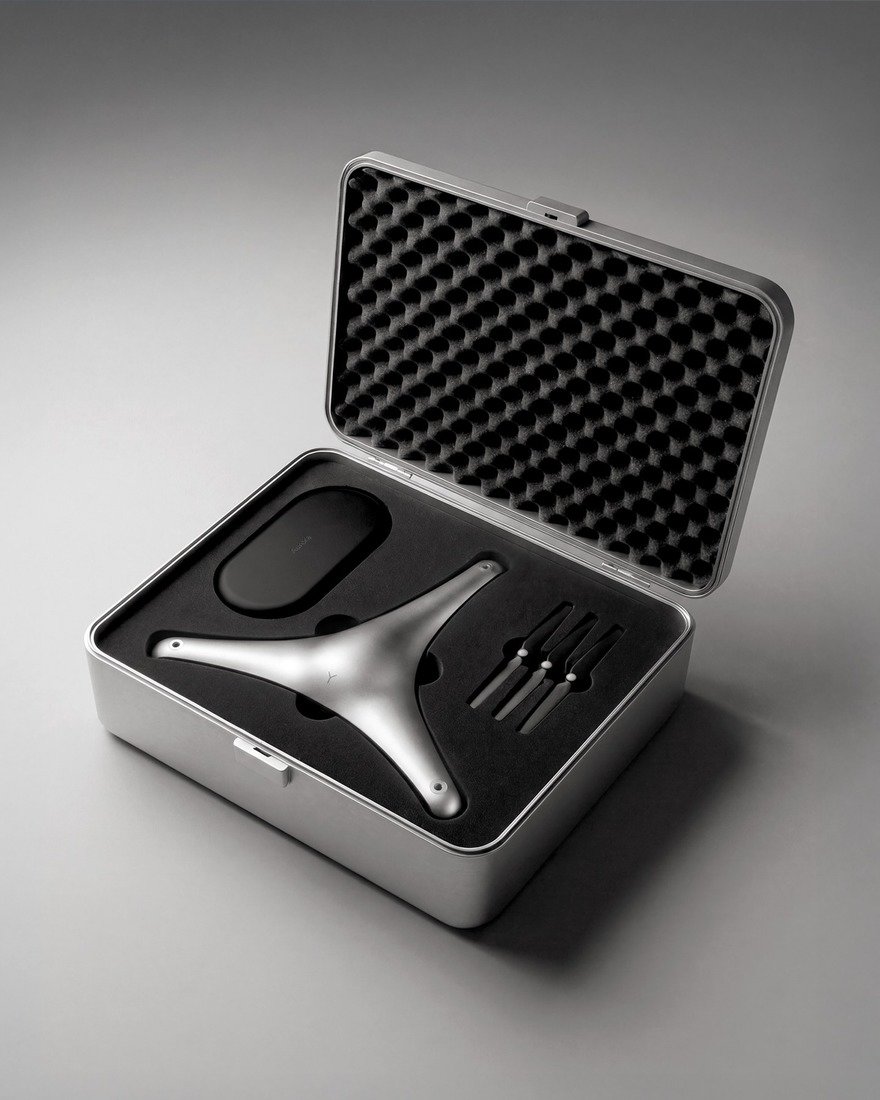
In his portfolio Essesi refers to it as the Aurora Drone; it's possible the client in question is Aurora Flight Sciences, a Boeing subsidiary that focuses on unmanned aircraft. However, that's pure conjecture.
-
oFavorite This
-
Q2Comment
Directory Company Profiles

Core77
Industrial Design
Resources
Industrial Design
Resources
-
Core77 Directory
Find the Best Industrial Design CompaniesGo -
Hatch Duo, LLC
Founded by an award-winning team with over 20 years of combined product design experience, Hatch Duo...
-
ECCO Design
ECCO Design is a full service product design and innovation firm. We are a team of designers, resear...
-
andesignlab
ANDESIGN is an industrial design consultancy based in Orange County California and Austin Texas. AN...
-
DesignStein Studios, LLC
We are a team of industrial designers focused on developing products that are intended for tooling a...
-
Bluemap Design
BlueMap design is a multi-disciplinary product development firm. Founded by Simon Yan in 2001, the f...
-
Fahrenheit Design
Fahrenheit is an award-winning product design and innovation firm based in Austin, Texas. Since 2002...
-
RMT PRODUCTS LIMITED.
RMT PRODUCTS CO. , LTD. provide on-time delivery, high-quality prototyping and manufacturing . It i...
K
{Welcome
Create a Core77 Account
Already have an account? Sign In
By creating a Core77 account you confirm that you accept the Terms of Use
K
Reset Password
Please enter your email and we will send an email to reset your password.
Comments
You have to wonder how it deals with the torque reaction of three rotors apparently all turning in the same direction. Presumably they're mounted off axis to provide a counter rotational thrust component.
Based on the blade shapes all three rotate the same way: I don’t think this can fly. Trirotors are certainly possible: https://www.instructables.com/Build-a-Tricopter-with-Rotor-Bits/ but typically also have a yaw servo or adaptive pitch rotors, which the design here lacks. The idea that this can glide is also dubious, it has 1/4 less wing area than an equivalent quad and without rotor tilt transitioning between flight modes will be difficult. Positioning the props above the wing surface is also an interesting choice that looks to reduce the vertical thrust by blocking airflow. Boeing’s Aurora spaces the props out from the wings to avoid this.