
e
From Sweden, a Hybrid Stud Design that Speeds Wall Construction
…and has a lower carbon footprint
In construction, load-bearing walls need beefy components in order to provide structure. However, for non-load-bearing walls, corners can be cut, as that wall's only job is to hold itself up. In order to reap economic benefits, builders will frequently use steel studs to build non-load-bearing walls. These are lighter, can be cut with snips rather than a miter saw, and are faster to install.
Swedish manufacturer Gyproc finds just one problem with steel studs: Their carbon footprint. They've thus developed an alternative product called the Hybrid Stud. This consists of two sort of mini-studs connected by a metal bracket.
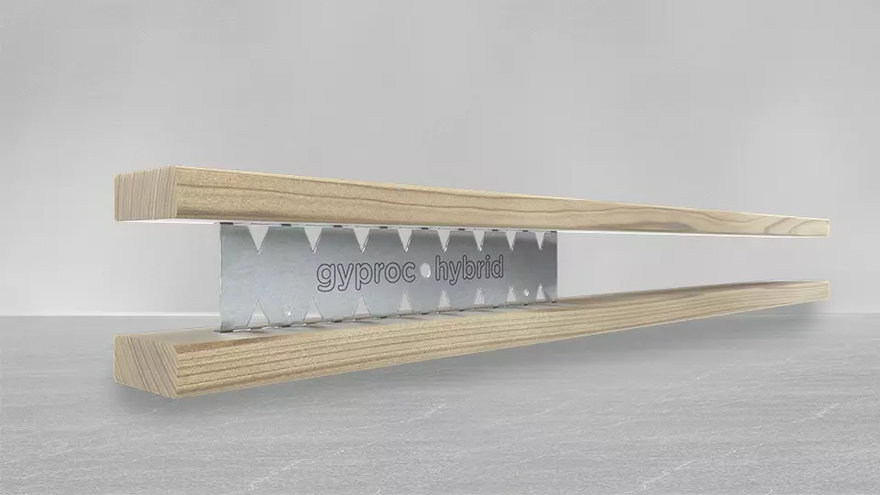
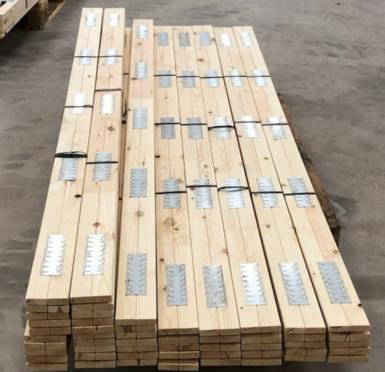
The units ship flat.
On-site, the builder folds the two pieces of wood towards each other, causing the bracket to bend.
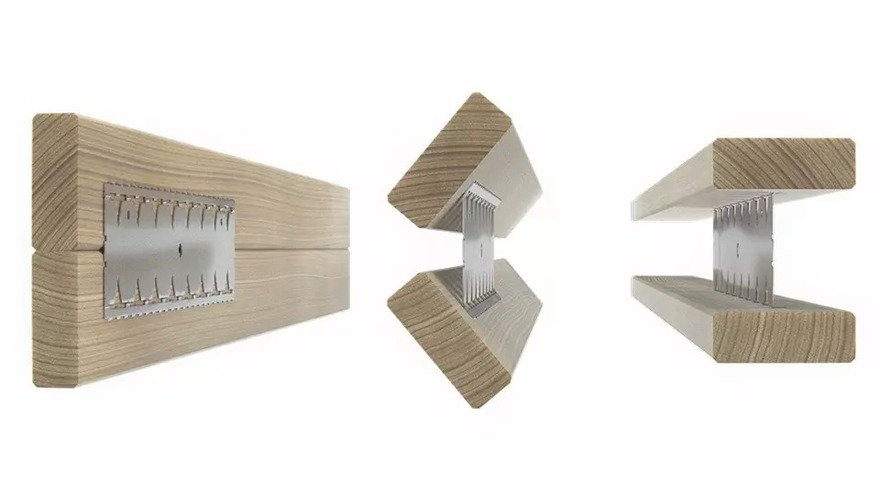
The entire assembly is then essentially a lightweight stud.
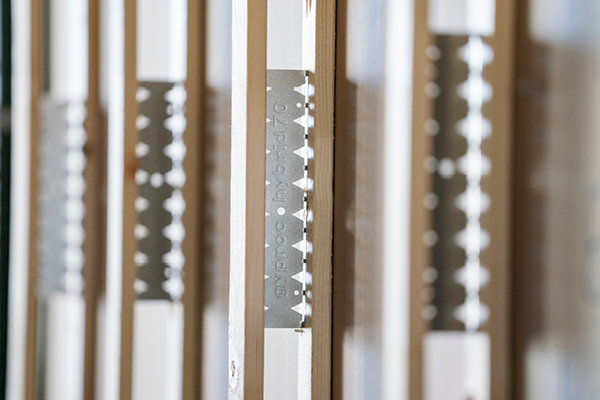
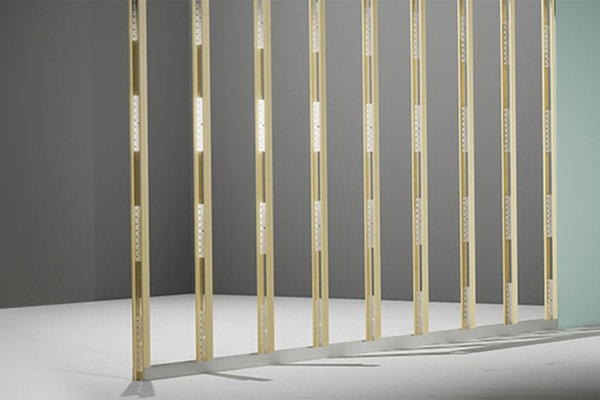
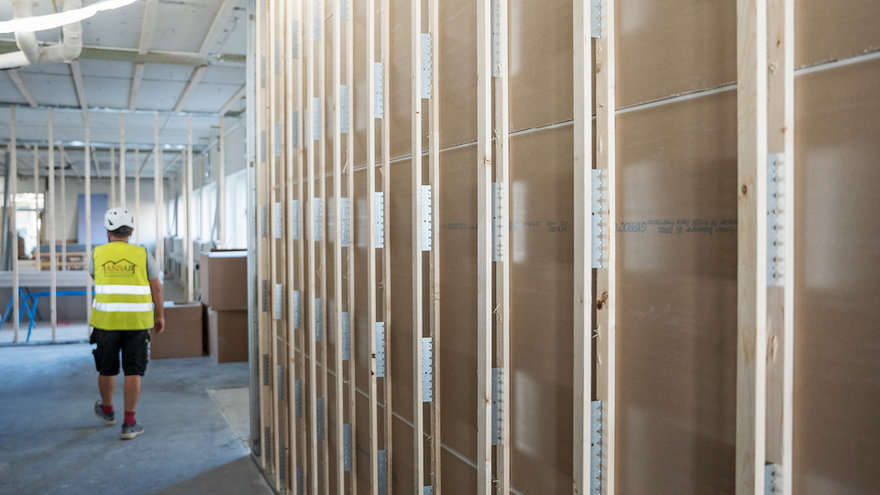
The carbon savings of a Hybrid Stud over a steel one are an 81% reduction.
As far as a cost savings, the math isn't straightforward: These cost roughly double what a steel stud does--but install in about half the time and using 33% less fasteners. That's because with steel studs, drywall must be fastened with screws, in order to penetrate the metal. With Hybrid Studs, however, a staplegun can be used. That's far faster than using a driver.
If you want to see them in action:
Enter a caption (optional)
-
o1Favorite This
-
Q3Comment
Directory Company Profiles

Core77
Industrial Design
Resources
Industrial Design
Resources
-
Core77 Directory
Find the Best Industrial Design CompaniesGo -
Hatch Duo, LLC
Founded by an award-winning team with over 20 years of combined product design experience, Hatch Duo...
-
ECCO Design
ECCO Design is a full service product design and innovation firm. We are a team of designers, resear...
-
andesignlab
ANDESIGN is an industrial design consultancy based in Orange County California and Austin Texas. AN...
-
DesignStein Studios, LLC
We are a team of industrial designers focused on developing products that are intended for tooling a...
-
Bluemap Design
BlueMap design is a multi-disciplinary product development firm. Founded by Simon Yan in 2001, the f...
-
Fahrenheit Design
Fahrenheit is an award-winning product design and innovation firm based in Austin, Texas. Since 2002...
-
RMT PRODUCTS LIMITED.
RMT PRODUCTS CO. , LTD. provide on-time delivery, high-quality prototyping and manufacturing . It i...
K
{Welcome
Create a Core77 Account
Already have an account? Sign In
By creating a Core77 account you confirm that you accept the Terms of Use
K
Reset Password
Please enter your email and we will send an email to reset your password.
Comments
I don't know what contractor told you you can use staples to put up drywall, but you should probably not let them build anything in your house. And while interior non-loadbearing walls don't need to be as robust they still need to be more sturdy than a room divider.
Is cutting down trees really better? mass-timber-wood-construction-climate-change
Most of the images look like 6" o.c. spacing.>?<...